
Last updated November 22, 2026
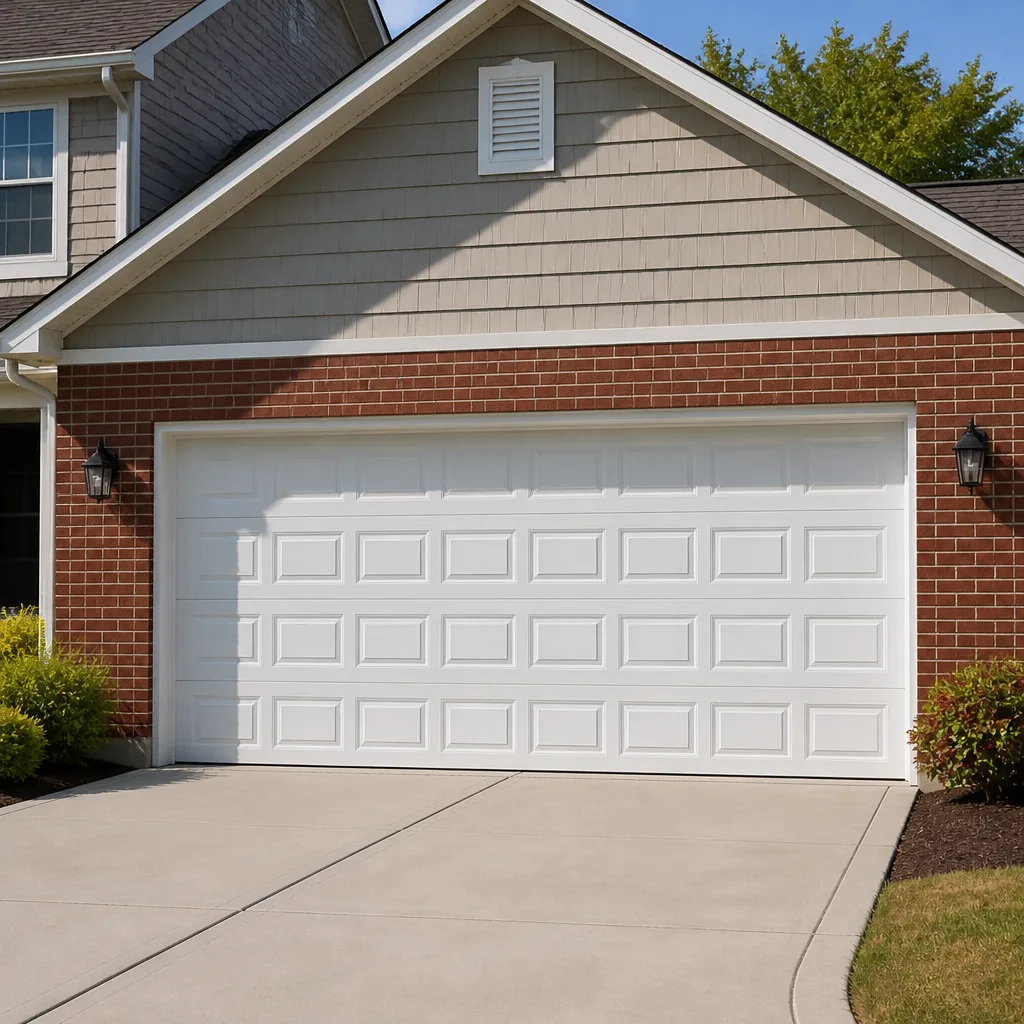 Raised-panel steel
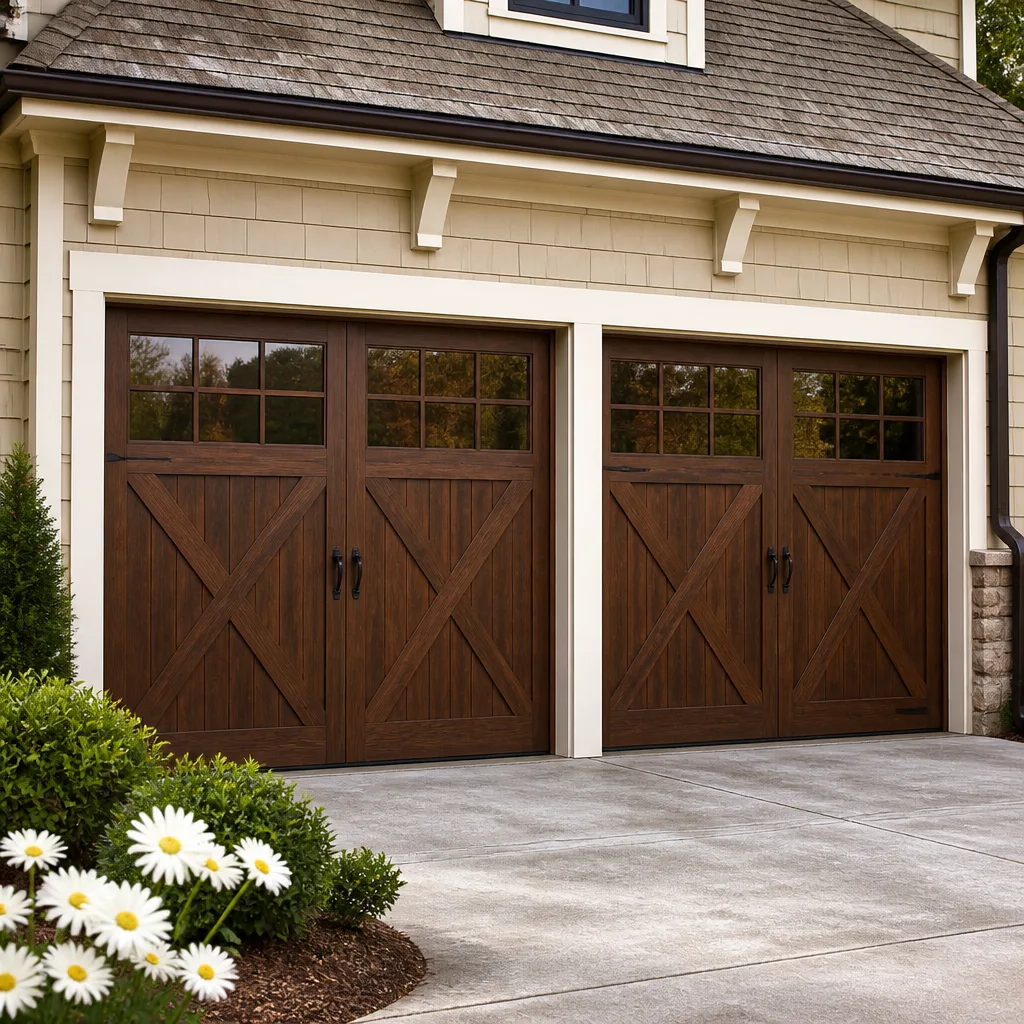 Carriage house
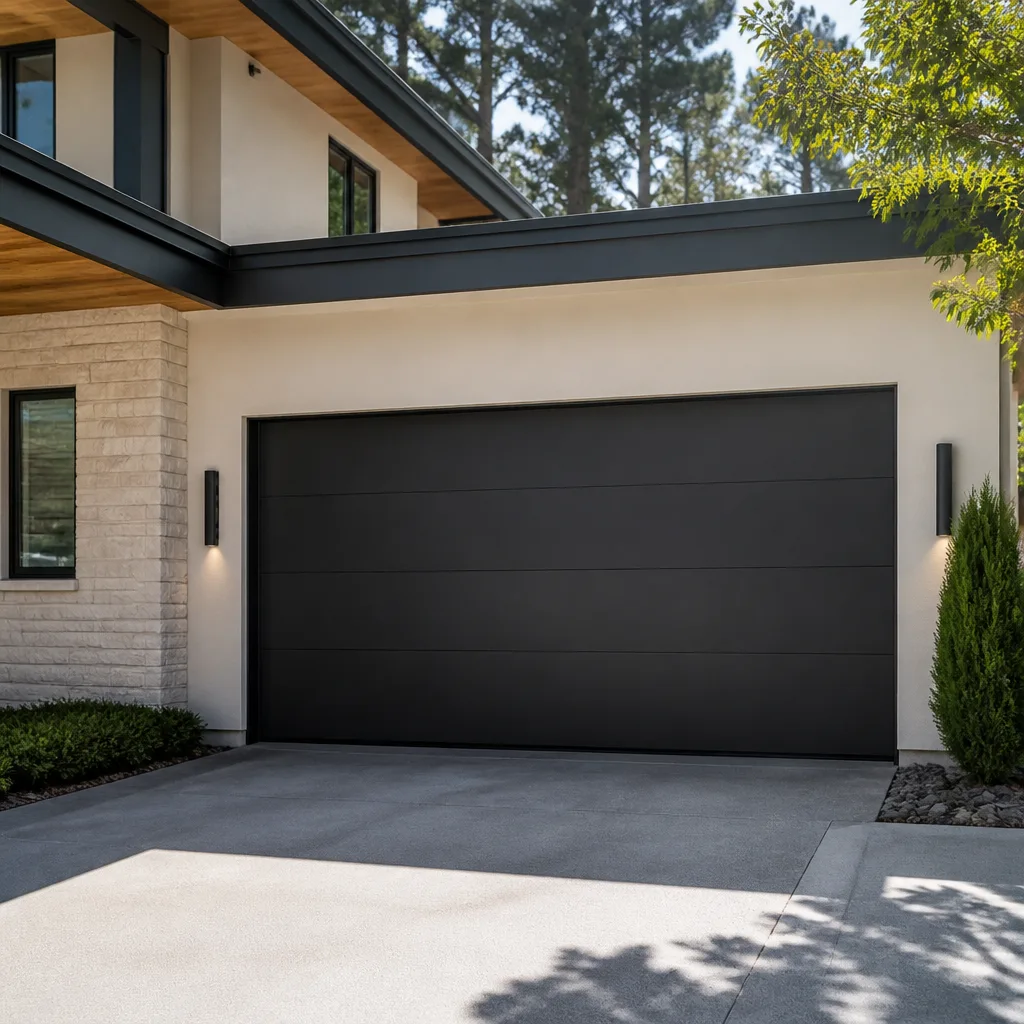 Modern flush
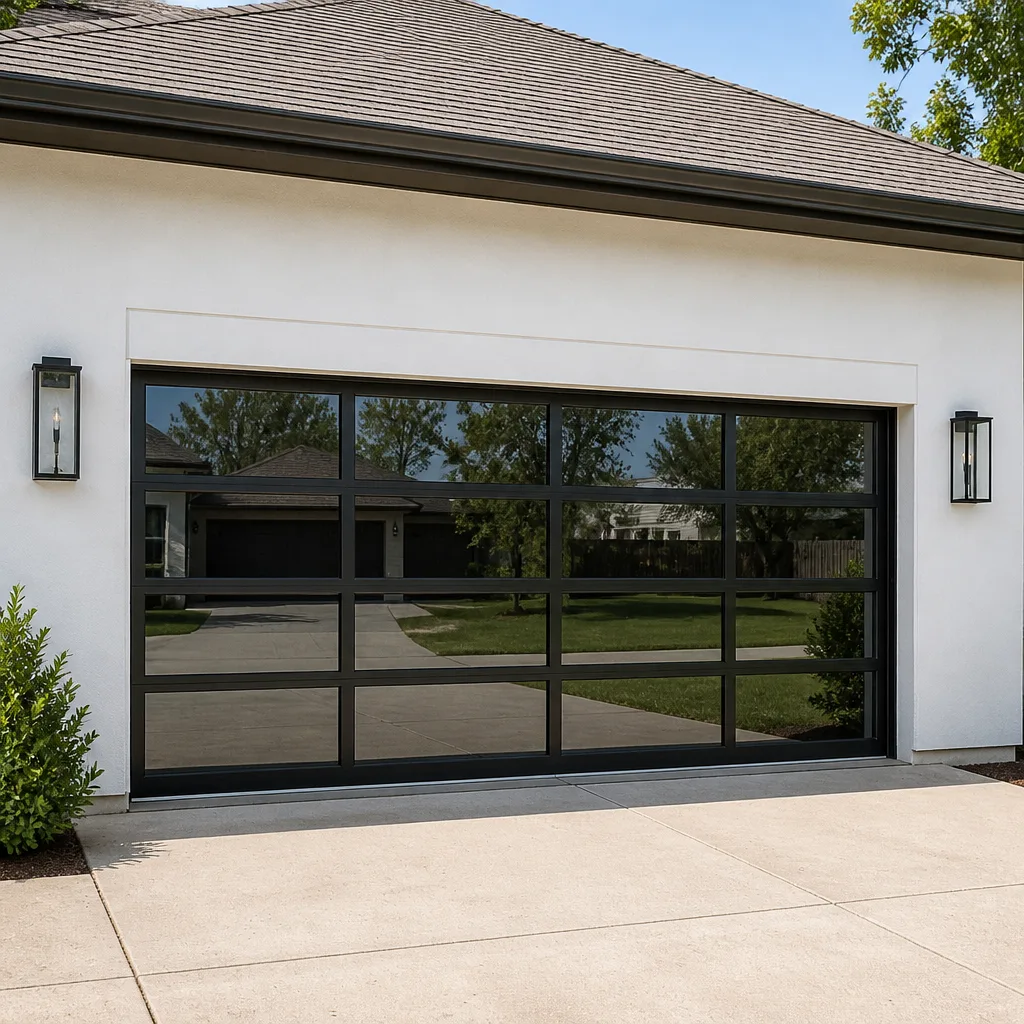 Full-view glass
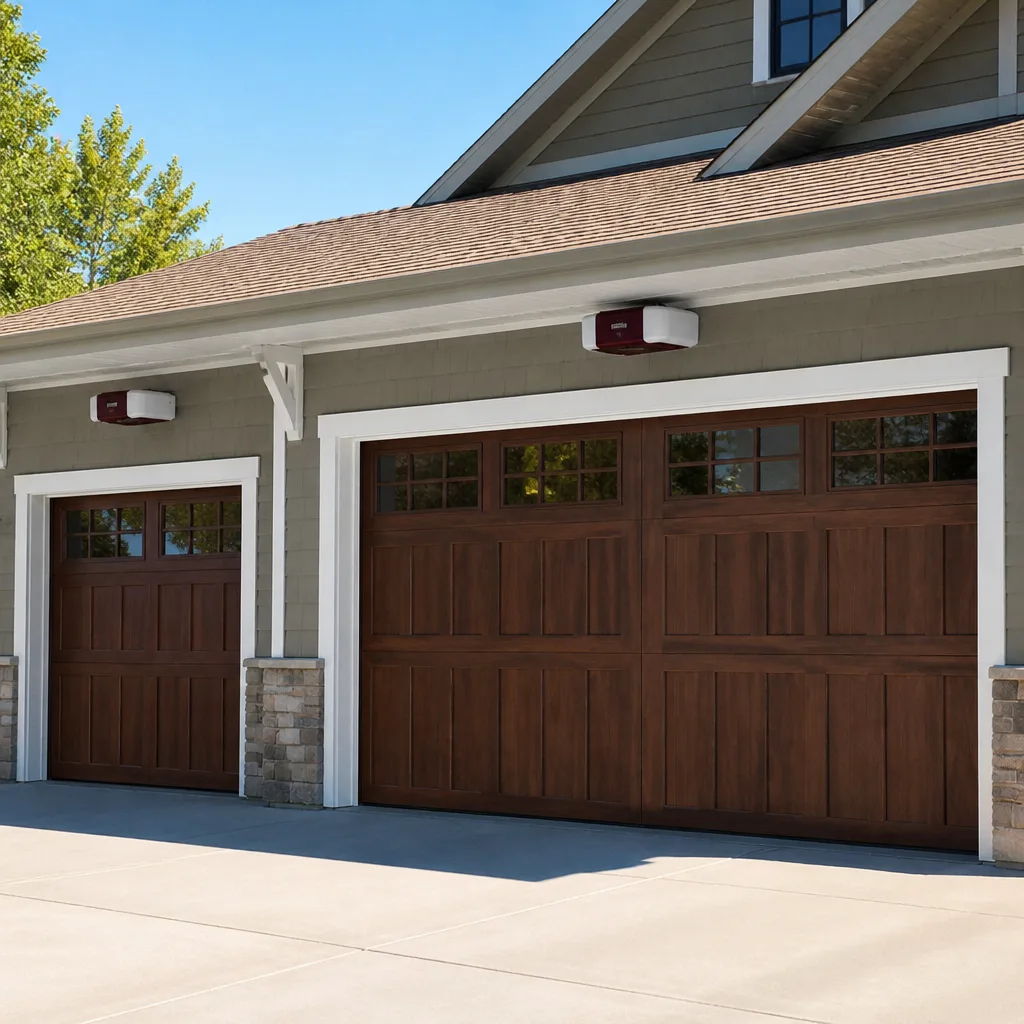 LiftMaster openers
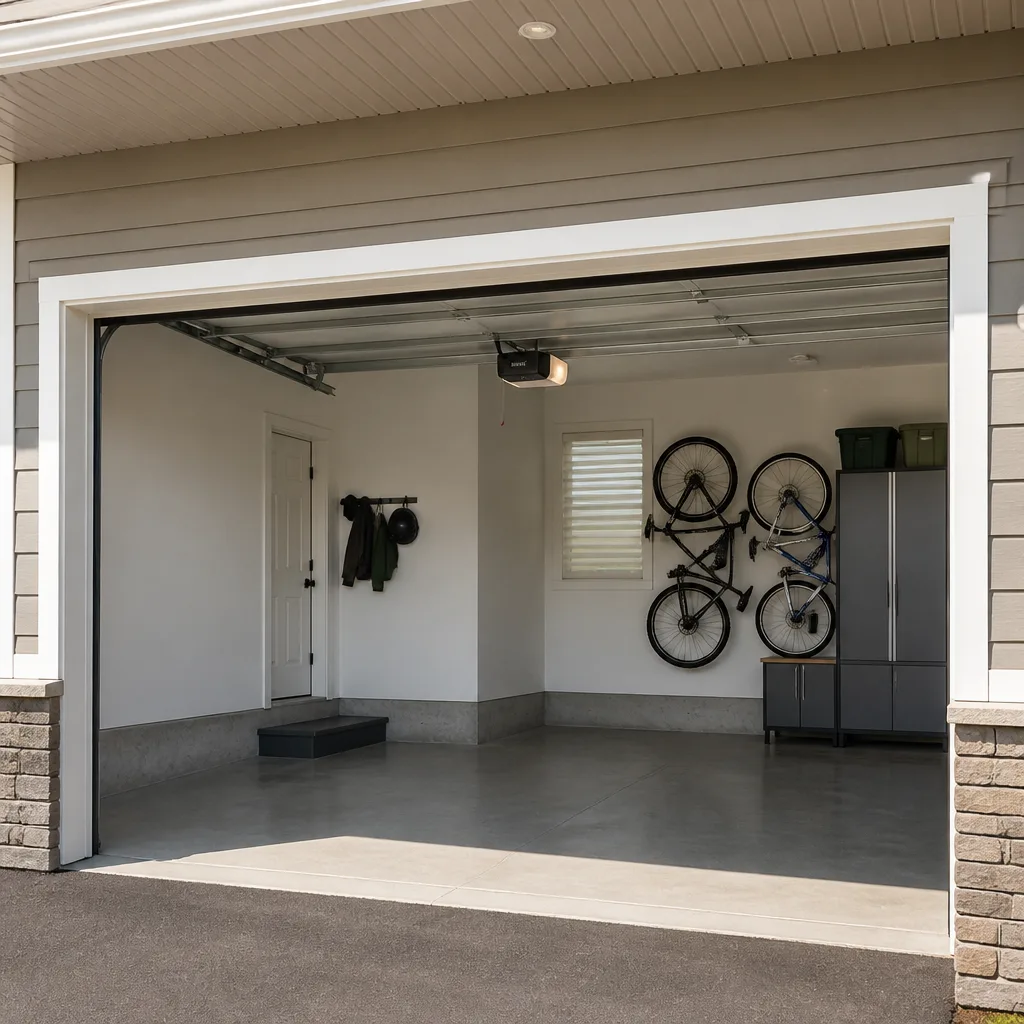 Chamberlain openers
Full 25-point door and opener safety check with every visit - springs, cables, rollers, tracks, and your LiftMaster or Chamberlain opener included
You get a price before we start. It does not change when the pro arrives.
Get your free estimateSeasonal Garage Door Care for Sanford: Year-Round Homeowner’s Guide
Most garage door maintenance advice you’ll find online was written for a place with four clean seasons, and it doesn’t fit Sanford. We don’t get a slow crawl from winter to spring to summer to fall. We get a dry stretch, a stretch where the air holds water like a sponge, and a hurricane window in between. Each one stresses your door in a different way, and the failures that follow are predictable once you know the pattern. This guide reorganizes garage door care around those three phases, with the material specs, inspection points, and timing that actually hold up in central Florida. By the end, you’ll have a schedule you can put on the calendar and a clear sense of what you can handle yourself and what needs a professional.
Quick Answer
Seasonal garage door care in Sanford runs on three phases, not four seasons. From November through April, the job is sealing out dust and UV damage and lubricating moving parts before the humid air returns. From May through June, you inspect wind-load bracing, replace a dried bottom seal, and load-test the opener’s battery backup. From July through October, the focus flips to condensation, track rust, and opener electronics. Torsion springs, cables, and anything involving a door under tension should be inspected by a professional, not adjusted by a homeowner.
Styles & brands we work with
- Raised-panel steel
- Carriage house
- Modern flush
- Full-view glass
- LiftMaster openers
- Chamberlain openers
Table of Contents
- The Sanford Dry Season (November to April)
- Pre-Hurricane Season Prep (May and June)
- The Wet Season and Moisture Control (July to October)
- How Sanford’s Temperature Swing Stresses Torsion Springs
- A Month-by-Month Maintenance Schedule for Sanford
- Materials That Perform in Florida Conditions
- What You Can Check Yourself
- When to Call a Professional
The Sanford Dry Season (November to April)
The dry season is the part of the year everyone relaxes, and it’s where a lot of wet-season problems are quietly set in motion. Relative humidity drops, the rain slows, and fine dust settles into every moving part of your door system. That dust doesn’t announce itself. It migrates into the opener’s drive mechanism, the rollers, and the hinges, and it sits there until summer humidity turns it into a gummy paste that drags on the motor and accelerates wear.
There’s a second, less obvious dry-season problem: UV degradation. Novembers through Aprils of clear Florida sun beat on the plastic components of an opener housing, on any plastic rollers, and on the edges of a door’s weatherstripping. Plastic that’s been cooked for a full dry season can go brittle and crack before it ever meets a stress load. That’s the mechanism behind a manual release cable that won’t budge when you need it. The cable hasn’t failed in the storm. It seized months earlier, in the benign months, when dust got into the sleeve and the cycle of heat and cool locked it in place.
Here’s how to organize the dry season:
- Lubricate the moving metal – a proper garage door lubricant on the torsion spring, hinges, and rollers every dry season. Avoid heavy grease that attracts and traps dust.
- Wipe and inspect the opener drive – clean dust from the drive mechanism and check the belt or chain for stiff links and slack. A Genie or Chamberlain unit that starts sounding labored in April often has a dry, dirty drive.
- Check UV wear on plastic parts – openers, limiter brackets, plastic rollers, and weatherstrip. Cracks and chalky surfaces mean a part is closer to failing than its working condition suggests.
- Test the manual release by hand – with the door disengaged, the release should pull smoothly. A stiff or stuck cable is the single most common thing we find while it’s still cheap to fix.
- Lubricate the cable drums – a light application before the humidity cycle returns keeps the drum turning freely when wet air thickens whatever’s already on it.
Doing this work now, in Sanford’s easy months, is the difference between a door that holds up through a wet summer and one that starts complaining the first time the atmosphere turns heavy.
Pre-Hurricane Season Prep (May and June)
May and June are the months to check the parts that only matter during a named storm, because by the time a storm is in the forecast it’s too late to order a part or schedule a professional. The three priorities are wind-load bracing, the bottom seal, and the opener’s battery backup. All three can be checked in an afternoon, and all three are things Sanford homeowners routinely ignore until they’re testing the door during a watch.
Wind-load bracing kits. If your door was built or added to with a storm in mind, it may carry a bracing kit or reinforced hinges and struts. In our experience, most homeowners don’t know whether they have one. Check the door’s paperwork, look for horizontal struts across the panels, and have a professional confirm the door and its hardware are rated for the wind loads your area expects. A bracing kit that’s been sitting in a dry season for years should be inspected for loose fasteners and corrosion before you count on it.
Bottom seal timing. The bottom seal takes the worst wear on the whole door. It’s the primary barrier that keeps rain, wind-driven debris, and pests out. By late dry season, a seal that’s done its job for a while dries out and loses its flexibility. May is the right time to replace it, not during a storm. A fresh seal pressed against a clean floor makes a real difference to how a door holds up under wind.
Battery backup load test. If your opener has battery backup, a battery that passed a quick click-test in March can fail under a real load in July. Load-test it properly: with the door connected to the opener and the power disconnected at the breaker, run the door a full cycle up and down and time it. If it’s slow, straining, or won’t complete the cycle, replace the battery. A battery that won’t lift the door under load won’t help you during an outage.
Do the bracing inspection first, the seal second, and the battery test last.
The Wet Season and Moisture Control (July to October)
When the wet season settles in, July through October, the problems shift from wear to moisture. The air in a Sanford garage can hold enough water to bead on steel panels, and any uninsulated garage turns into a condensation chamber. That sets off three predictable issues: condensation on steel door panels, rust developing on tracks, and corrosion creeping into the electronics of the opener’s logic board.
Condensation on steel panels. Steel is a good conductor, so it reaches the temperature of the surrounding air fast. Warm, humid air that touches a cooler panel condenses, and water sits on the surface. Wipe panels dry on a routine cadence and check the bottom of the door and the panel seams where moisture collects. A Clopay or Amarr steel door is built to handle Florida weather, but any steel surface that stays wet will eventually pit if the finish has chipped.
Track rust wipe-down cadence. We recommend wiping the tracks in the wet season on the same schedule you’d dust in a drier climate – it’s that quick and that worth doing. A dry rag along the inside of each track, followed by a light garage-door lubricant, keeps rust from forming in the channel where the rollers ride. Don’t overdo the lube. A thin film is better than a heavy coat that holds grit.
Humidity and the opener logic board. The opener electronics are sensitive to moisture, and a Wayne Dalton or LiftMaster unit in an uninsulated Florida garage can see humid air move through the housing. Look for signs of corrosion on the board itself, flickering lights, and erratic behavior during and after wet weather. If the opener starts behaving unpredictably when the air is heavy, that’s the signal to call for garage door opener repair rather than waiting for a full failure.
Track lubrication and panel drying are homeowner jobs. If your tracks are rusting and your opener misbehaves, the moisture problem is past what maintenance can fix.
How Sanford’s Temperature Swing Stresses Torsion Springs
Torsion springs are the metal coils under the ceiling that balance the weight of the door, and they are under extreme tension when the door is closed and still under heavy load when it’s open. In a northern climate, springs see the biggest swings once: winter cold and summer heat, with long plateaus in between. In Sanford, a spring can see a cool winter night of roughly a mild 50 degrees and then a warm afternoon of near 90 in the same week. It’s the same metal, absorbing more thermal cycles per year than a northern counterpart, because Florida nights stay mild enough that the garage door still opens and closes all winter.
Metal expands with heat and contracts with cold. Each full cycle through that range works the spring material, and repeated cycling is exactly what leads to metal fatigue. Florida’s mild nights mean the door gets used and the spring gets loaded and unloaded year-round, rather than sitting idle through a hard freeze. It’s why spring life here can be shorter than the same spring installed in a colder place, and why we treat spring care as a seasonal priority rather than a once-every-few-years item.
It’s also why we say the springs are the part to leave alone. Garage door springs are under extreme tension. A spring that looks fine isn’t a spring you should test or adjust by hand, and a broken spring also means the door is not safe to use. That’s not a repair you want to make on the driveway, whatever the internet tells you. Spring work is a dedicated, safety-critical service best handled by a trained technician.
On the schedule front, the practical timing is to have a professional inspect your springs in the dry season, before the humidity sets in, and again after the hurricane window closes. The inspection is quick and the value is catching fatigue before it becomes a snapped spring with a car trapped inside the garage. We also specialize in garage door repair for doors that are already showing symptoms, like sagging, loud strain, or uneven travel.
A Month-by-Month Maintenance Schedule for Sanford
Here’s the practical version of everything above, arranged so you don’t have to think about it more than once a year. The two anchors are professional inspections (springs, cables, hardware) at the start of the dry season and the start of the wet season. The rest is quick homeowner work.
- November – spring and cable inspection. Have a professional check springs, cables, and all load-bearing hardware.
- December – dry-season lubrication. Lubricate the torsion spring, hinges, rollers, and drum per the manufacturer’s guidance.
- January – opener drive clean-out. Clear dust from the drive mechanism, check belt/chain tension, and listen for new noise.
- February – manual release test. Verify the release cable pulls smoothly and engages cleanly. If it’s stiff, get a professional to free it before it’s needed.
- March – UV and seal check. Look for cracked plastic parts and dried or cracked weatherstrip. Replace what’s brittle.
- April – final dry-season check. A quick end-to-end run of the door and opener, plus a bottom-seal condition check before the seal dries out.
- May – hurricane prep, part one. Confirm wind-load bracing and hardware condition. Replace the bottom seal if it’s dry or torn.
- June – hurricane prep, part two. Load-test the battery backup by running a full cycle with the power off.
- July – wet-season lubrication. Light lubricant in the tracks and on moving parts, not a heavy coat.
- August – moisture inspection. Wipe steel panels dry and look for rust starting in the tracks and at the bottom of the door.
- September – electronics check. Watch the opener for erratic behavior, flickering lights, or slow response.
- October – end-of-wet-season inspection. Have a professional check springs and hardware again, then repeat the cycle.
This is the schedule we’d put on any Sanford homeowner’s refrigerator if we could. You can do most of it with a rag, a lubricant, and ten minutes. The two professional checkpoints are the ones that need training and the right tools.
Materials That Perform in Florida Conditions
The wrong products make seasonal care harder, so it’s worth specifying what actually holds up. These aren’t brand endorsements, they’re material specs that survive Sanford’s climate.
- Lubricant: a garage door spray lubricant meant for metal-on-metal use and formulated to resist washout in humidity. Avoid general-purpose oil, heavy grease, and anything that stays tacky and collects grit.
- Bottom seal: a flexible vinyl or rubber seal, not a rigid or old-dried-out one. The right seal compresses against the floor and stays flexible through both wet and dry phases.
- Weatherstrip: a UV-resistant material for the edges and top of the door. Standard weatherstrip will dry and crack in the dry-season sun unless it’s rated for it.
- Paint and finish on steel doors: a finish meant for exterior steel, applied to any chipped or bare spots before the wet season. Bare steel pits fast in humid air.
- Tracks and rollers: keep the roller material matched to the track. Dry or worn nylon rollers that have gone brittle in the sun should be replaced, not just lubricated.
- Battery backup: a battery that’s load-tested, not just click-tested. Replace it on a schedule, not when it fails.
If you’re replacing a worn part, check whether it’s rated for exterior use in a hot, humid environment. A part built for a dry climate will let you down in a Sanford July every time.
What You Can Check Yourself
Some seasonal care is genuinely homeowner work, and some isn’t, and the line is mostly about tension and height. The homeowner jobs are low-risk and worth doing yourself. The others should go to a professional, especially anything involving springs, cables, or electrical work.
Safe homeowner checks:
- Run the door up and down and listen for new noises, grinding, or banging.
- Wipe and lubricate the tracks, hinges, and rollers with an appropriate lubricant.
- Look for cracked plastic parts, chalky surfaces, and dry or torn weatherstrip.
- Test the manual release by hand from the inside of the garage.
- Look for rust starting in the tracks and along the bottom of the door.
- Clean the opener drive of dust and check the belt or chain for slack.
Leave to a professional:
- Springs, spring adjustment, and cable work. Springs are under extreme tension and a snap can injure a person standing near the door.
- Anything involving the opener’s electrical wiring or logic board.
- Track adjustment and balancing if the door is off-level or binding.
- Wind-load bracing inspection if you don’t know what’s installed.
We tell Sanford homeowners this plainly because we’ve seen the results of a spring handled by someone who thought it looked easy. It isn’t a repair to take on as a weekend project. If you’re not sure whether a symptom is a homeowner fix or a professional one, call and describe it. We can usually tell you.
Common Mistakes to Avoid
- Skipping the dry-season lubrication because you don’t hear anything wrong. The door doesn’t complain until it’s grinding. A November lube is the cheapest maintenance you’ll do all year.
- Trusting a quick battery click-test and calling it done. A green light on the opener doesn’t prove the battery will lift the door under load. Run a full cycle with the power off.
- Waiting for hurricane season to check bracing. By the time a storm is forecast, you may not be able to get a part or a technician. Check in May, not in October.
- Greasing the tracks. Tracks get a light film, not a heavy coat. Heavy grease traps grit and makes the rollers drag. A dry wipe first is what keeps rust down.
- Ignoring dry-season UV cracking. Brittle plastic and dried weatherstrip look cosmetic until they fail under a load. Replace them before the wet season makes them wet and weak.
- Adjusting or replacing springs on your own. Garage door springs are under extreme tension. This is the repair that sends people to the hospital when it’s done without training. Have it done by a professional.
- Skipping the end-of-wet-season inspection. October is the natural point to check what a full humid season did to the springs and hardware. A five-minute inspection is cheaper than a breakdown.
When to Call a Professional
Call a professional when the door is loud, binds, sags, or moves unevenly, and don’t wait to see if it corrects itself. Call when a spring has snapped, when the manual release won’t pull, when the opener behaves erratically in the wet season, when you don’t know whether your wind-load bracing is adequate, or when your tracks show rust that a wipe-down won’t stop. Also call if the door won’t open or close at all, because a door that’s stuck open is a security problem, not just an inconvenience. Sanford Garage Door Repair Co offers free estimates in Sanford – call (855) 658-4309. We answer 24/7. Fast dispatch from 7am to 7pm, Sunday through Friday. When the job is a replacement rather than a repair, the same company handles garage door installation, so you don’t need to find a second contractor mid-job. The price is quoted and agreed before any work starts, so there’s no surprise invoice.
See the difference
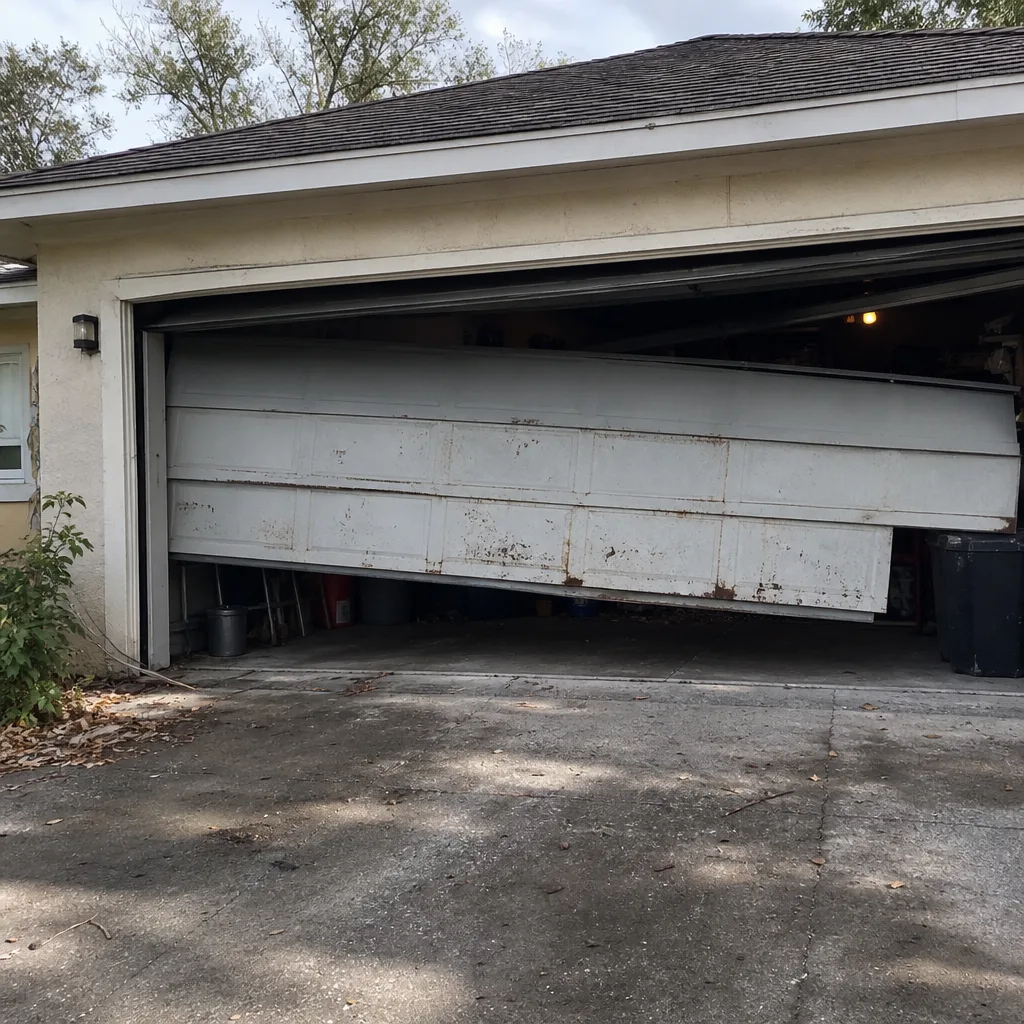 Before
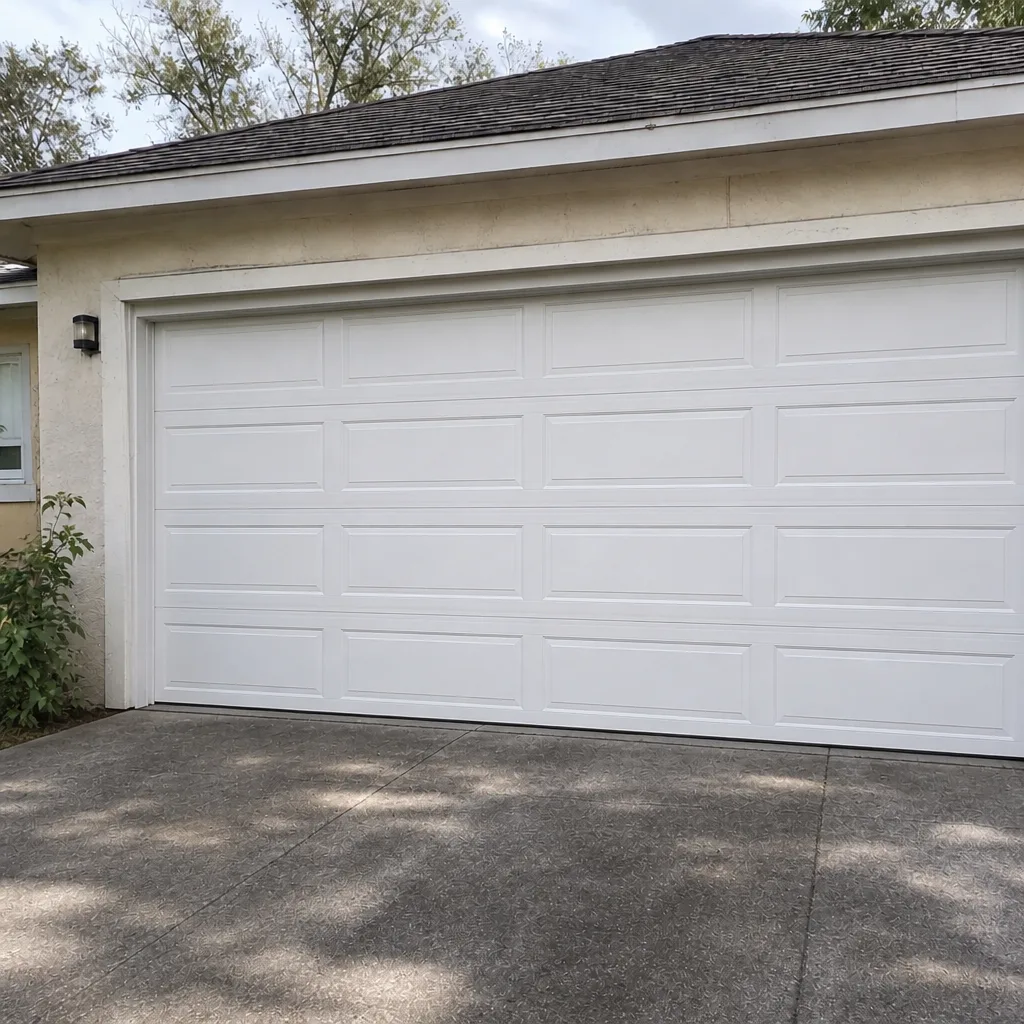 After
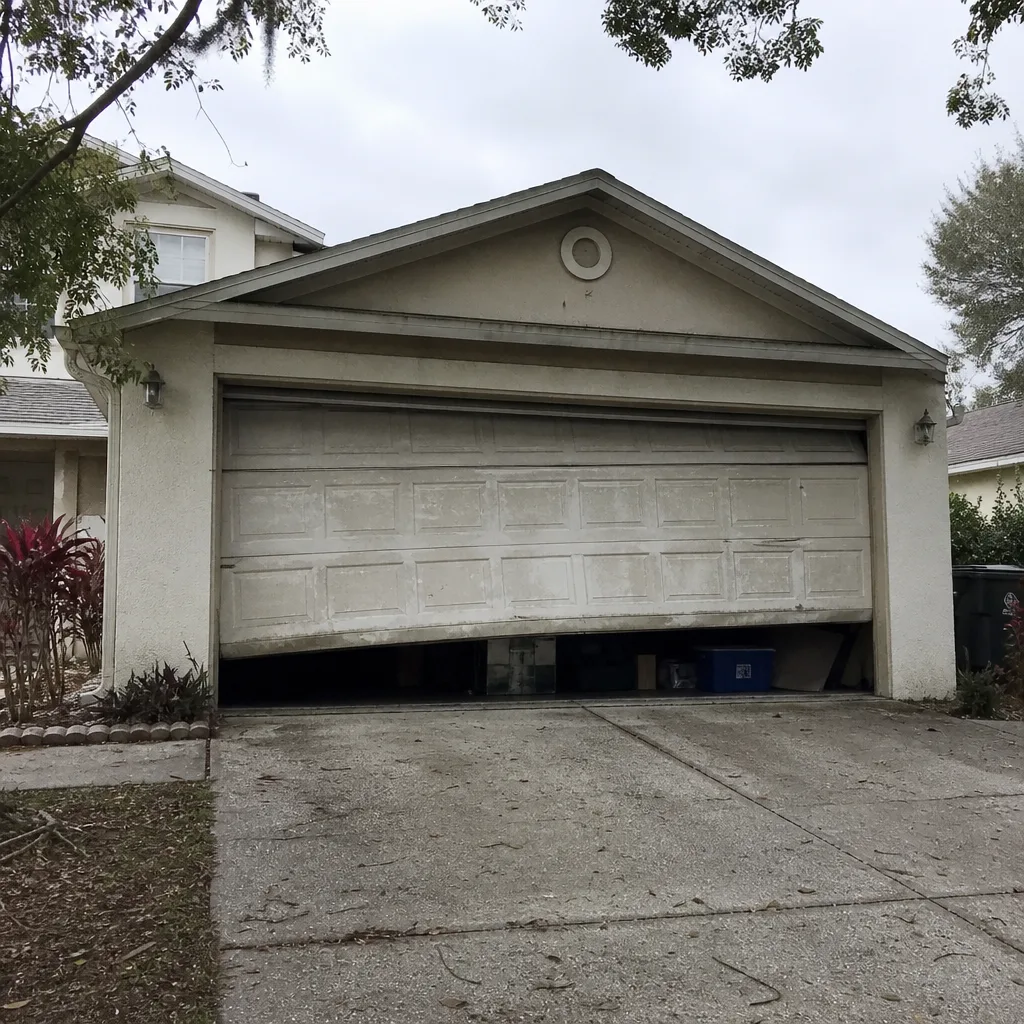 Before
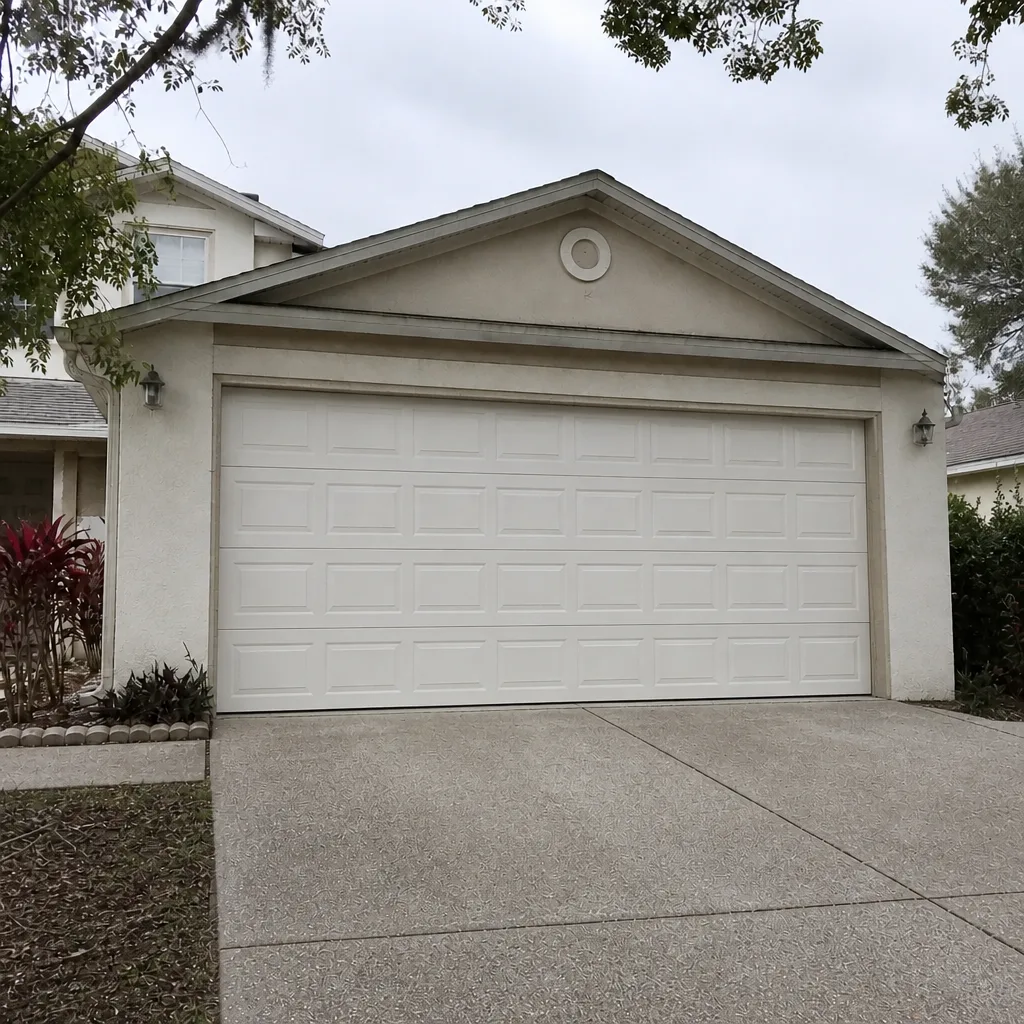 After
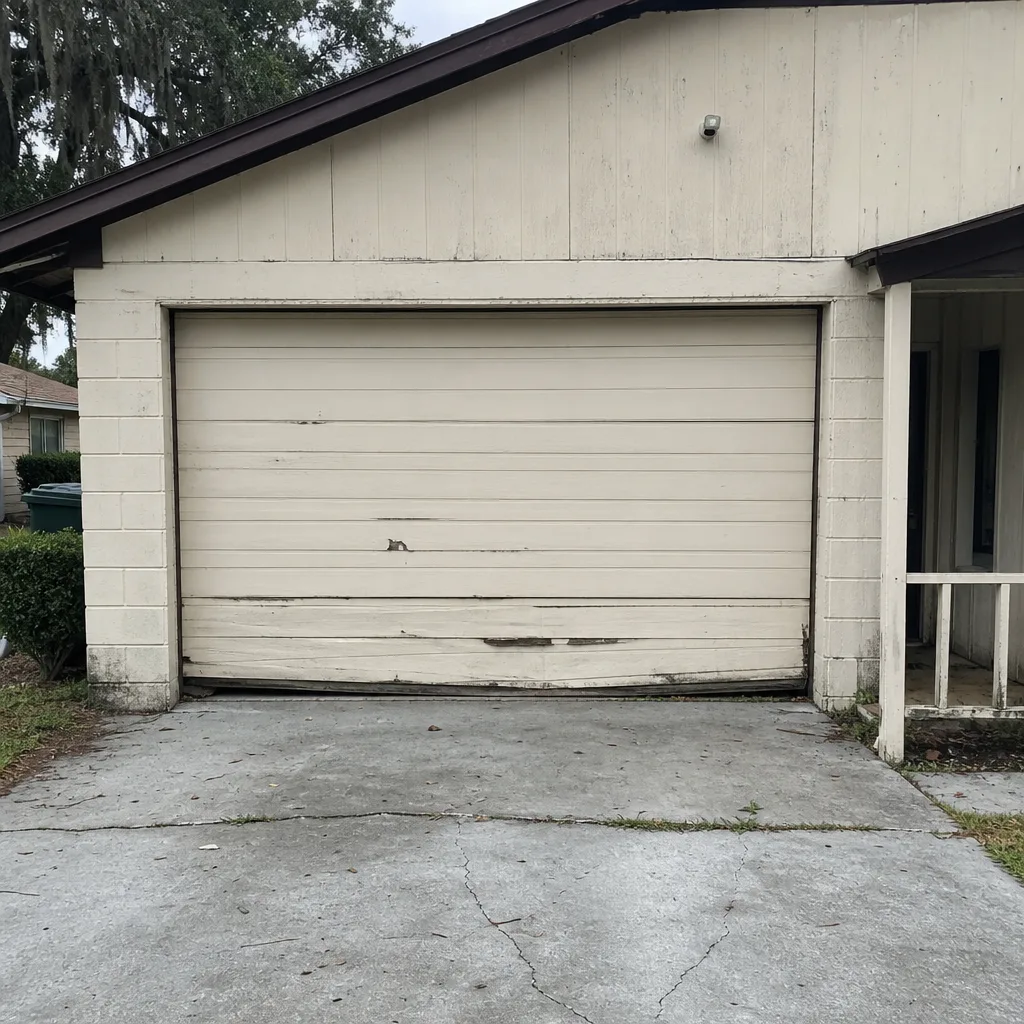 Before
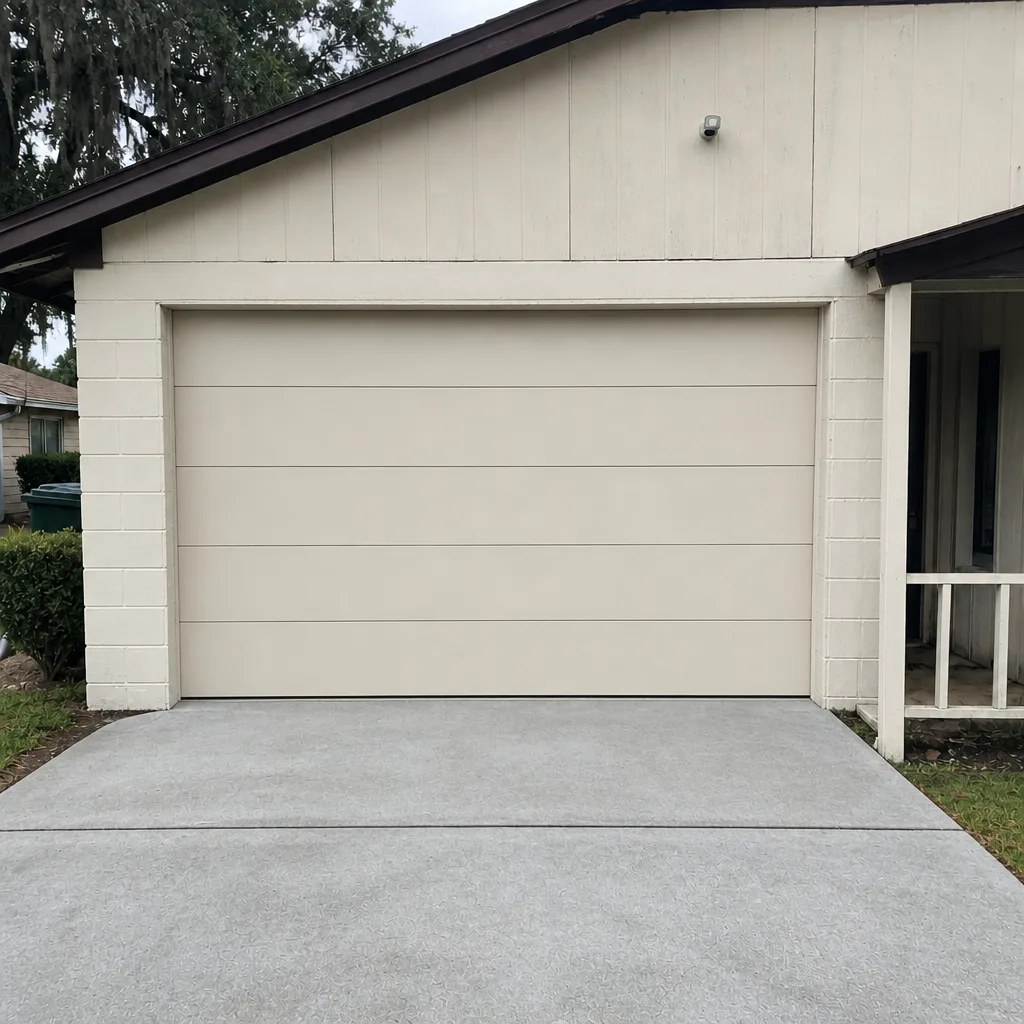 After
Frequently Asked Questions
Twice a year is the right cadence here: once at the start of the dry season in November and again after the wet season in October. Spring service once a year is the minimum, but Sanford’s mild nights mean the door is used year-round, which adds cycles. A professional inspection at both points catches wear before it becomes a breakdown. If you’re not sure when you last had the door looked at, call (855) 658-4309; estimates are free.
Yes, and a proper one means running the door through a full cycle with the power off, not just checking a light. A battery that passes a click-test can still fail under load. Test in May or June, before the storm window opens. Call (855) 658-4309 to schedule a check if you’d rather have a technician verify it.
Usually it comes down to how much moisture gets into the tracks and how often it’s wiped. An uninsulated garage holds humid air differently from one with a finished interior, and a door that’s opened and closed more often sees more wet air inside. Wipe the tracks dry in the wet season and keep a light lubricant film on them. If the rust is already deep in the track, call for garage door repair before it spreads.
Yes, the bottom seal is one of the easiest homeowner jobs on the whole door, and there’s no spring tension involved. Buy a flexible seal rated for exterior use, slide out the old one, and seat the new one evenly. Timing matters: replace it in May, before the dry season has hardened it. If the seal is stuck or the door bottom is damaged, call (855) 658-4309.
Humidity is usually the cause. Wet-season air carries moisture into the opener housing, and that can affect the logic board and the drive mechanism at the same time. Dust from the dry season that turned sticky in the humidity makes it worse. If the opener misbehaves only in the wet months, that’s a moisture problem worth checking. Call (855) 658-4309 for an estimate; the written quote sets the price.
The local pros we connect you with are licensed and insured as their state requires. We work on eight major brands: LiftMaster, Chamberlain, Genie, Clopay, Amarr, Wayne Dalton, Craftsman, and Raynor. Call (855) 658-4309 and we’ll explain what the visit covers before work starts. The estimate is free, and the price is agreed in writing before any work begins.
The Bottom Line
Sanford doesn’t need a four-season garage door schedule. It needs three phases: a dry-season focus on dust, UV, and lubrication; a pre-hurricane check of bracing, bottom seal, and battery backup; and a wet-season focus on condensation, track rust, and opener electronics. The mild temperature swings here cycle your springs year-round, so spring inspection at both ends of the year is the single highest-value habit. Most of the rest you can do yourself with a rag and a lubricant. The parts under tension go to a professional, every time. Put the two professional checkpoints on your calendar and the door will take care of itself the rest of the year.
Contact Us
If this guide raised a question about your own door, call Sanford Garage Door Repair Co at (855) 658-4309 for a free estimate. Our technicians have up to 14 years of experience, we work on eight major brands, and we’ll tell you straight whether you’re looking at routine maintenance or a repair that needs a professional. We answer 24/7, with fast dispatch from 7am to 7pm, Sunday through Friday. If a season has already turned into a breakdown, we also handle emergency garage door service. Start with a free estimate.
Written by the team at Sanford Garage Door Repair Co.