
Last updated November 22, 2026
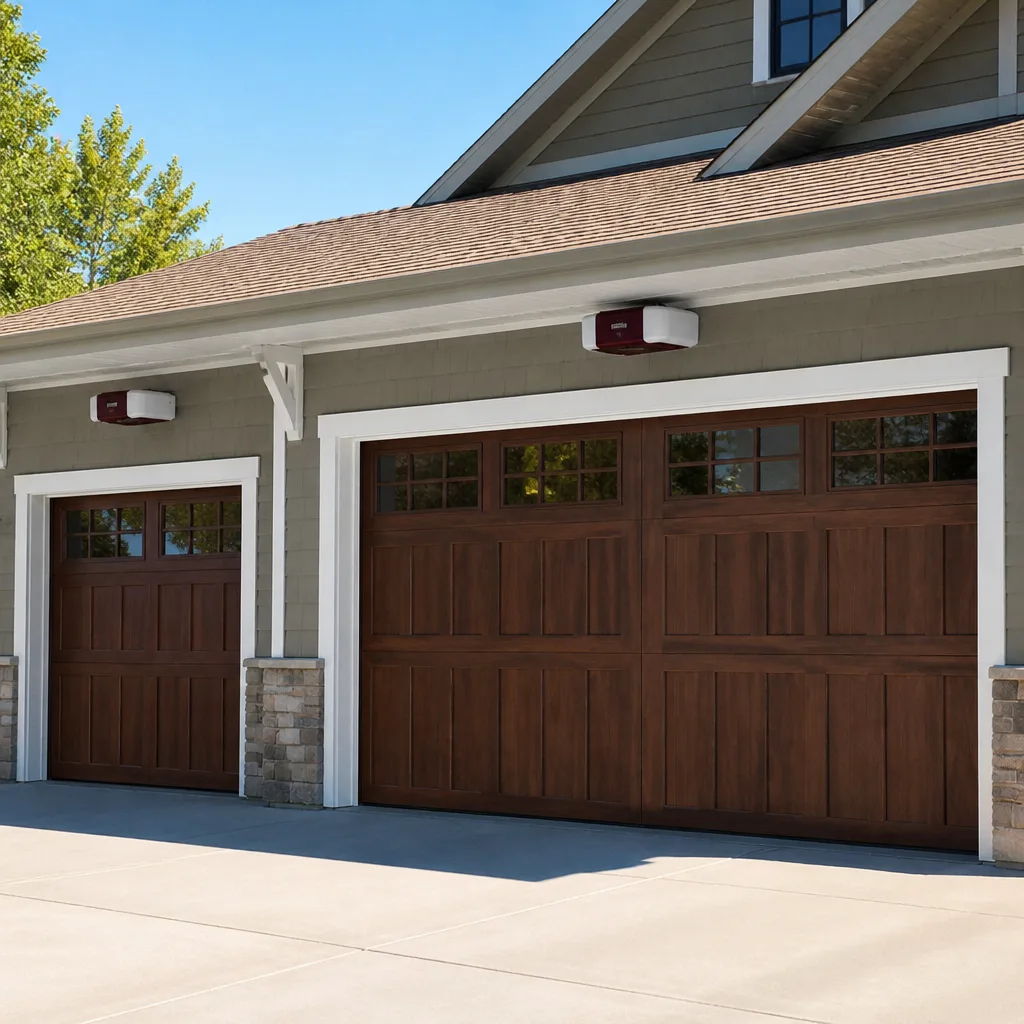
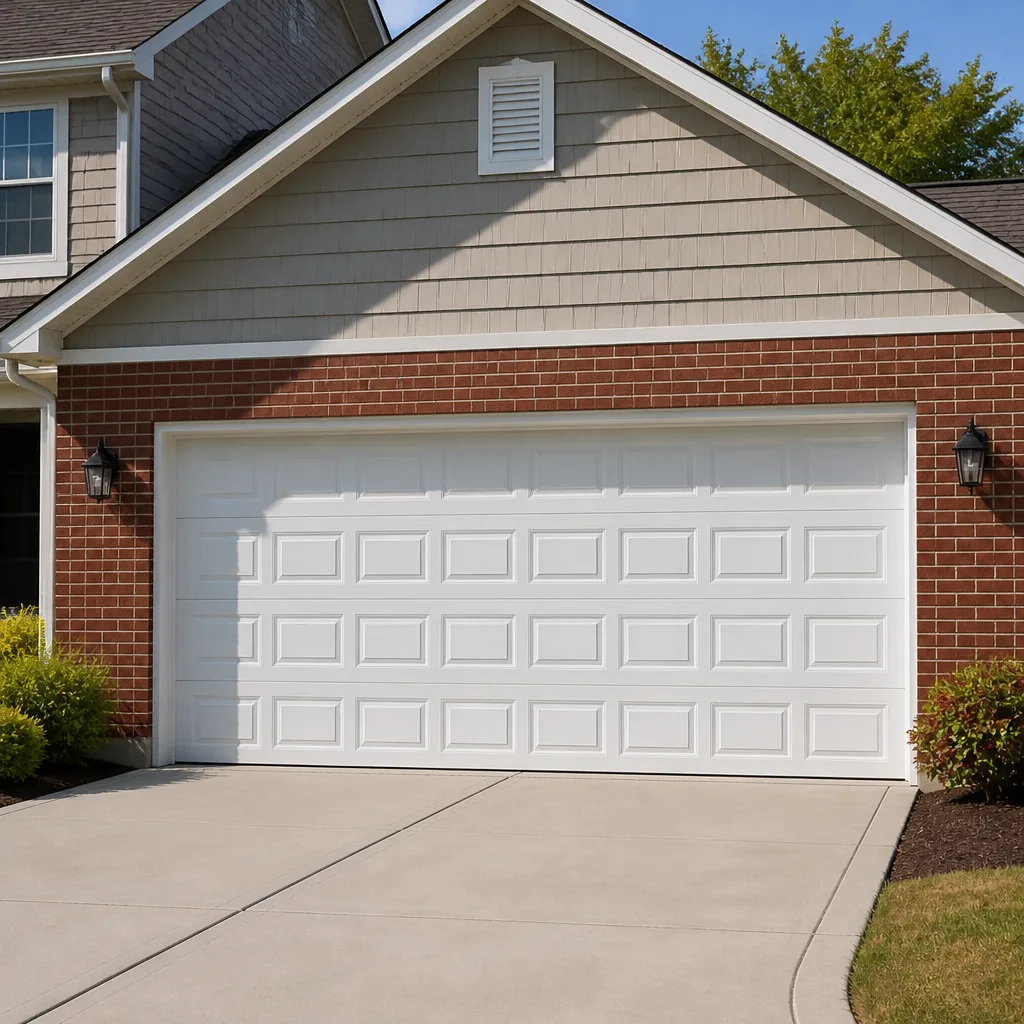 Raised-panel steel
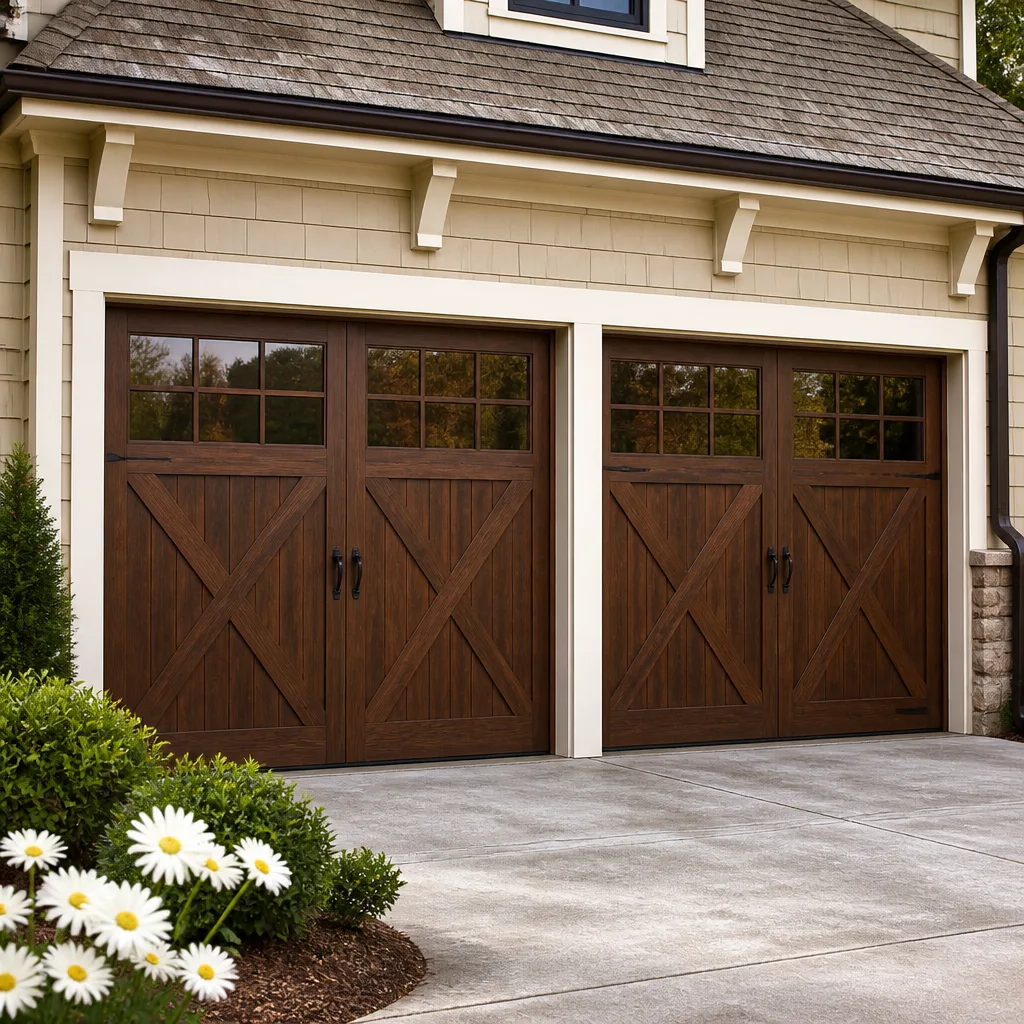 Carriage house
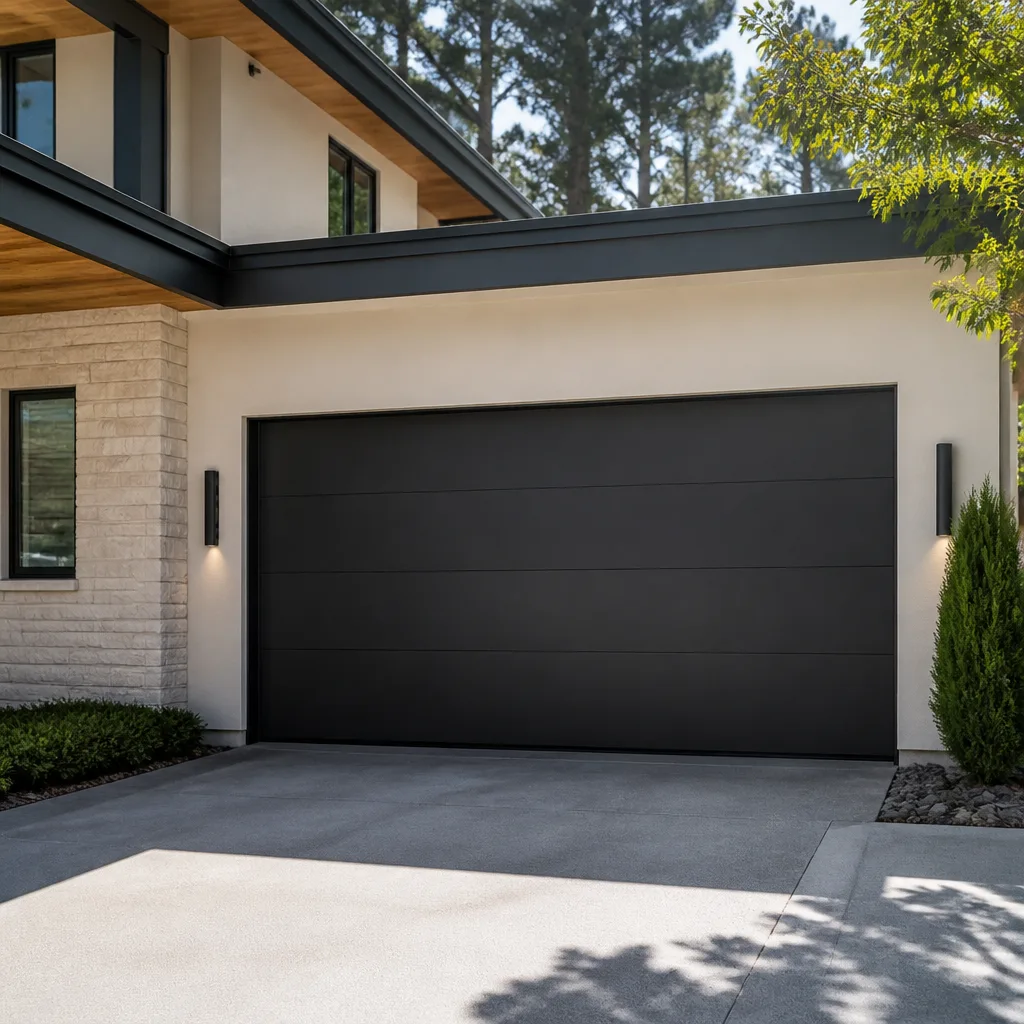 Modern flush
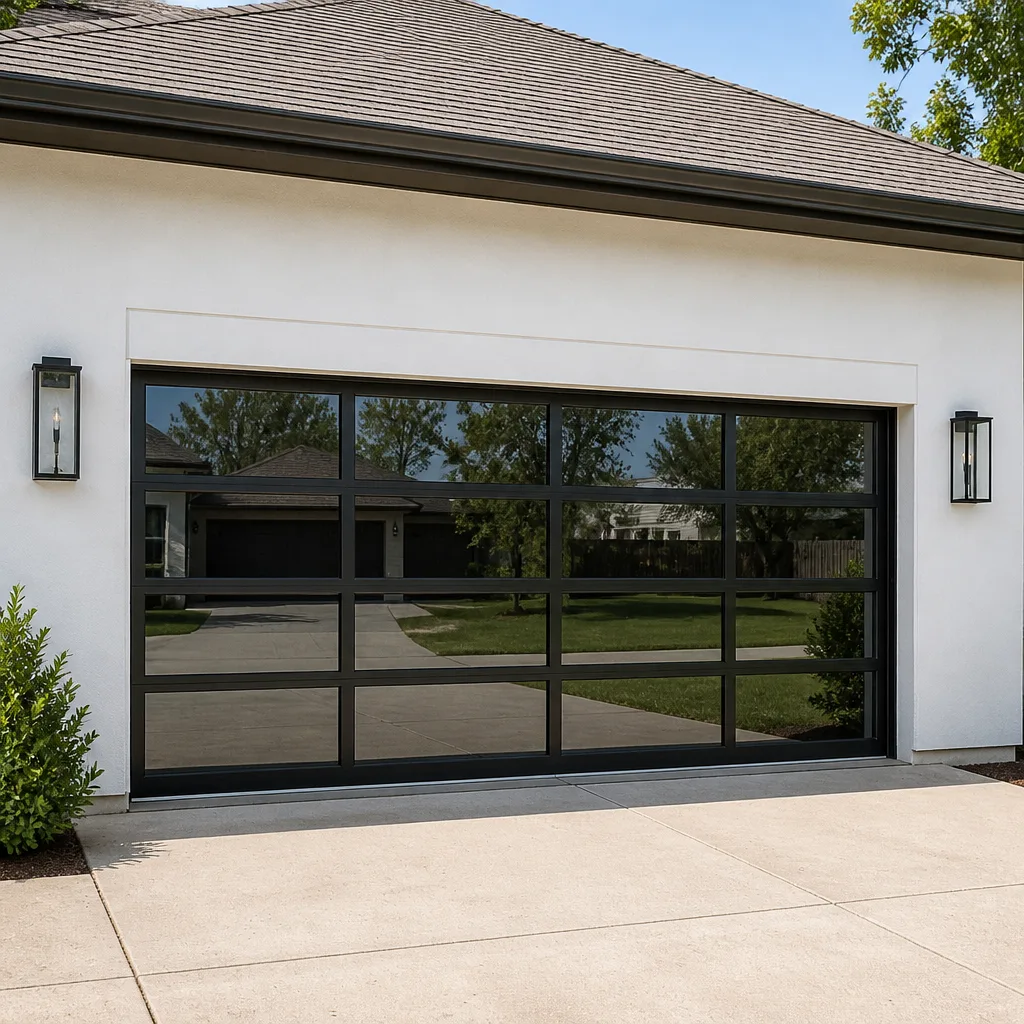 Full-view glass
 LiftMaster openers
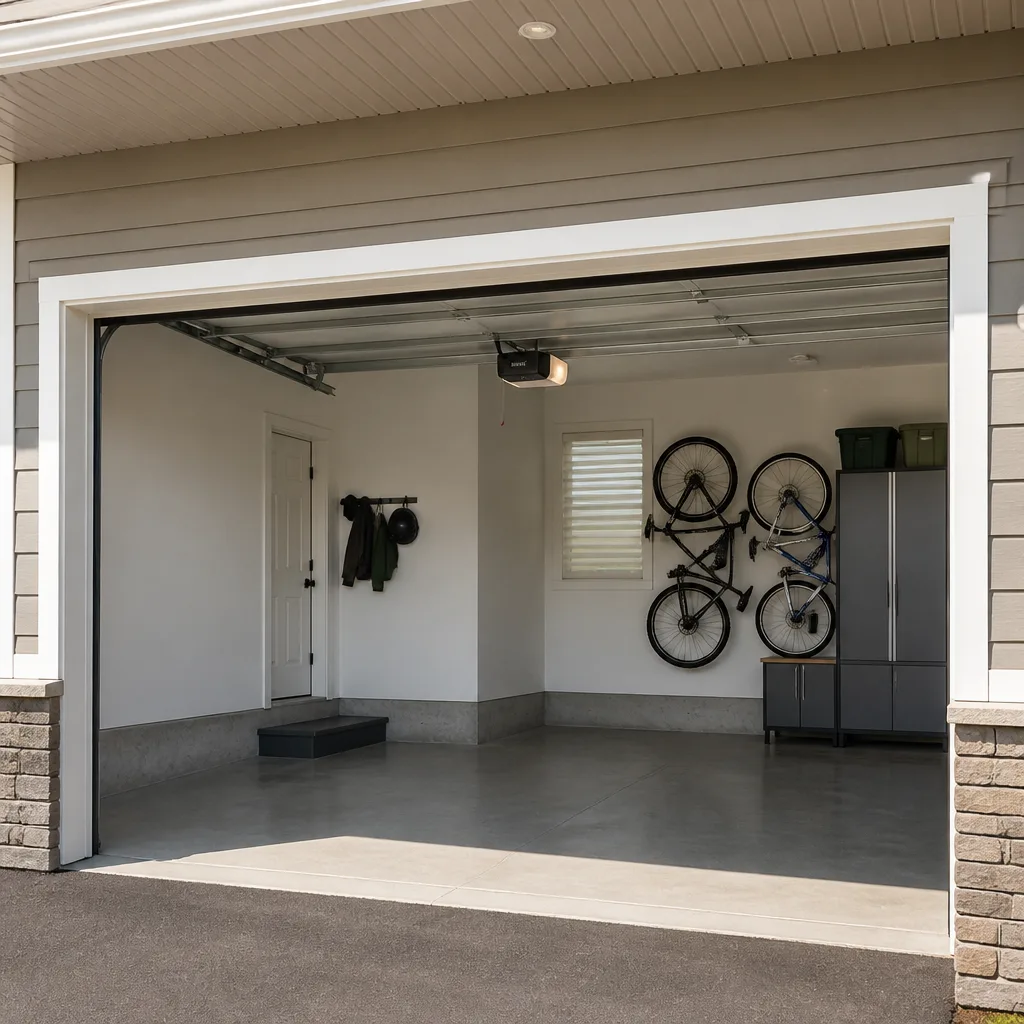 Chamberlain openers
Full 25-point door and opener safety check with every visit - springs, cables, rollers, tracks, and your LiftMaster or Chamberlain opener included
You get a price before we start. It does not change when the pro arrives.
Get your free estimateHow to Hire a Garage Door Contractor in Sanford: A Step-by-Step Guide
Most homeowners hire a garage door contractor by doing the two easiest things: checking the price and skimming the reviews. That misses the question that actually decides whether the job goes well. Florida requires a licensed contractor for garage door work when it involves structural changes to the opening, yet “licensed” carries three different meanings in this industry, and most homeowners are never told which one protects them. In this guide, we walk you through a concrete vetting framework for Sanford: which license type your job needs, how to check it in under two minutes, what a real written quote itemizes, and the storm-season red flags that separate a local pro from a crew that vanishes before a warranty claim. You’ll come away able to compare three bids honestly, not just by the bottom line.
Quick Answer
To hire a garage door contractor in Sanford, verify their license type against your specific job on the Florida DBPR portal, confirm they can work on your door and opener brand, and demand a written quote that itemizes parts with model numbers, labor, permit fees, and warranty terms. Use a contractor who specializes in garage doors only, not a general handyman. Full replacement of a door or opener under structural work needs a licensed contractor, and any spring repair is a job for a trained professional because springs sit under extreme tension. The lowest bid rarely stays the lowest once the scope is clear.
Styles & brands we work with
- Raised-panel steel
- Carriage house
- Modern flush
- Full-view glass
- LiftMaster openers
- Chamberlain openers
Table of Contents
- The Three Meanings of “Licensed” in Florida Garage Door Work
- How to Verify a Contractor on the Florida DBPR Portal
- Why Brand Coverage Matters (and Why “We Service All Brands” Isn’t Filler)
- What a Written Quote Must Itemize
- Storm-Season Contractor Red Flags in Sanford
- Permits, Florida Product Approval, and Your Home’s Opening
- Frequently Asked Questions
- The Bottom Line
The Three Meanings of “Licensed” in Florida Garage Door Work
When a garage door company in Sanford tells you they’re “licensed,” that single word can refer to three different things in Florida, and only one of them may apply to your job. Understanding the difference is the first step of a real vetting process.
The three categories you’ll encounter:
- A Florida DBPR-licensed contractor. This is a state-certified contractor whose license is issued and tracked through the Florida Department of Business and Professional Regulation. This is the highest level of accountability and covers work that involves structural changes to the garage opening or the home’s framing.
- A registered specialty contractor. Registered with a local jurisdiction rather than the state. The scope they can legally perform is narrower, and it depends on the county or city registration rules.
- A registered garage door dealer. Some companies register as dealers rather than contractors, which limits the type of work they can take on and the liability they carry.
Which one you need depends on the job. A broken spring or a failing opener is repair work and doesn’t require a structural license. A full door replacement that involves reframing, new anchoring, or a change to the opening does. If you’re planning garage door installation that involves structural modifications, ask directly which license the company holds and confirm it covers the scope you’ve described. For routine adjustments and opener work, the license type matters less than brand familiarity and a track record.
Sanford sits in Seminole County, and garage door work here spans everything from older established neighborhoods to newer construction on the edge of town. The permit and inspection rules can vary by municipality, so if a contractor can’t answer clearly which jurisdiction issues the permit for your address, that’s your first clue. Ask your city’s building department, and ask the contractor to give you the same answer in writing.
How to Verify a Contractor on the Florida DBPR Portal
Before you ask for a quote, spend two minutes verifying the license yourself. The Florida DBPR portal lets you look up any contractor by name, license number, or business entity. Here’s the step-by-step:
- Get the contractor’s license number, not just the company name. A number is specific; a name can be shared by multiple entities.
- Search the DBPR database using that number. Match the license type and the named individual or qualifying agent to what the company told you.
- Check the license status. An active status matters. A delinquent, expired, or revoked license is a real problem.
- Read any complaint or discipline history the portal lists. You won’t find a spotless record everywhere, but you will see whether the issue was resolved.
- Cross-check the business name on the portal against the name on the written quote. They should match.
Do this for every contractor you’re seriously considering. It’s faster than reading a hundred reviews and tells you more. A company that hesitates when you ask for the license number is telling you something. A company that offers it before you ask is telling you something else.
In our experience working on garage doors throughout Sanford, the parts of a hire that cause the most trouble are never the visible ones. They’re the small verification steps that feel like busywork until you skip them. Two minutes on the DBPR portal prevents months of frustration down the line.
Why Brand Coverage Matters (and Why “We Service All Brands” Isn’t Filler)
Here’s a pattern worth understanding. Contractors who are locked into one brand’s ecosystem have one tool in the toolbox, and sometimes that tool is “sell you a replacement.” If a company only installs one manufacturer’s doors and openers, a repair that should cost a modest amount can get quoted as a full replacement because they can’t source the right parts or work on your existing brand.
Brand coverage is a real differentiator. At Sanford Garage Door Repair Co, we’re certified to work on eight major brands, including Chamberlain, Genie, Clopay, and Amarr, so homeowners in Sanford rarely hear “we don’t service that brand.” When a contractor can actually work on what you already own, the conversation changes from “what should we replace it with” to “here’s what’s wrong and here’s how to fix it.”
What to ask when you call:
- Can you service my door’s existing brand and model?
- Can you work on my opener separately from the door, or do you only replace openers when you install a new door?
- What brand parts do you source, and can you get the specific part number for my opener?
- If my opener is still under manufacturer warranty, do you work within that warranty?
These are reasonable questions, and a reputable company will answer them without hedging. The brand-dedicated dealer isn’t necessarily a bad actor; they’re just limited. For a repair, you want someone whose business is built around garage doors, not around one brand’s sales quota.
What a Written Quote Must Itemize
A written quote should let you compare job-to-job without guesswork. If two quotes say “replace spring” and “install new opener” with single lump sums and no detail, you can’t compare them accurately. Here’s what a real written quote should show:
- Parts with model numbers. Not just “torsion spring” but the wire gauge, length, and cycle rating. For openers, the exact model and horsepower. For doors, the door model and panel configuration.
- Labor. Broken out as a line item, not hidden inside a material markup. This also helps you spot a low-ball quote that hides a large labor addition later.
- Permit fee (if applicable). If the job requires a permit, the fee should be listed separately. A vague answer here is a warning sign.
- Warranty terms. Parts warranty and labor warranty should each be stated. A labor warranty of ninety days and a parts warranty of one year are two separate commitments.
- Scope of work in plain language. What’s being removed, what’s being installed, what’s tested, and what’s left alone. If the quote mentions “rebalance and tune-up,” ask what specific adjustments that includes.
Compare the quotes line by line, not total against total. The cheapest total can cost more by the time the work is done if the scope is thin or the parts are low-grade. This is why the written estimate sets the final price in our work, and why we put the number in writing before any work starts. You should expect the same from any contractor you hire in Sanford.
Storm-Season Contractor Red Flags in Sanford
Sanford’s storm season runs from June through November, and that’s when door-to-door garage door contractors tend to appear. In central Florida, wind damage to garage doors is a real issue: a compromised door is often the first point of entry during high winds, and a failing door during a storm is a genuine hazard, not just an inconvenience. That’s exactly the moment when bad actors show up to take advantage of homeowners who need a fast fix.
Red flags to watch for:
- Out-of-state plates or a P.O. box address. A storm-season crew that can’t tell you where they’re registered is one you’ll have trouble finding after the work is done.
- Cash-only deposits. A legitimate garage door contractor will take a card or check. Cash-only is a tell.
- Vague permit answers. If the contractor can’t tell you whether your job needs a permit, who applies for it, and who the inspector will be, they’ve likely never pulled one.
- Pressure to sign today. Storm damage creates urgency, but a real contractor will measure, quote in writing, and schedule. “Sign now at this price” is a pressure tactic.
- No local warranty address. Ask where a warranty claim gets handled. If the only answer is a phone number that rings out after a few months, that’s a problem.
- Quote has no parts brands or model numbers. You can’t verify what you’re paying for. A one-line quote is a warning sign in any weather.
If the storm has already hit and your door is damaged, you want garage door repair from a company that answers the phone and can get to you, not a stranger in an unmarked truck. We answer 24/7. Fast dispatch from 7am to 7pm, Sunday through Friday, closed Saturday. A call outside dispatch hours gets booked into the next opening, Sunday through Friday.
Permits, Florida Product Approval, and Your Home’s Opening
Florida has a detail most homeowners don’t hear until the inspector shows up: exterior doors, including garage doors, generally need Florida Product Approval to be installed legally on a home. Product approval is the state’s way of confirming that a particular door model has been tested and rated for the wind loads it will face in this state. A door installed without approved product can create real problems at resale or after a storm.
Ask any contractor you’re considering whether the door they’re quoting carries Florida Product Approval. They should be able to show you the documentation or tell you where to find it. This is a specific, checkable answer, not a sales pitch.
When a permit is required depends on the scope:
- Replacing a garage door on the same opening with an approved door of the same size and rating: often doesn’t require a permit, but confirm with your city’s building department.
- Structural changes to the opening (widening, heightening, reframing, changing the header): permit required. This is where the DBPR license type matters most.
- Adding a new opening or converting a non-garage opening: permit required, and typically engineered drawings.
Rules can vary by jurisdiction within Sanford, so the answer to “does this need a permit” always comes down to the specific job and the specific municipality. Ask your city’s building department directly and ask the contractor to confirm the same answer in writing. A real professional in Sanford will welcome the question.
Common Mistakes to Avoid
- Hiring a general handyman for spring work. Torsion springs are under extreme tension and store enough energy to cause serious injury. An unqualified contractor is risking themselves and anyone nearby. This is not a job to hand to a generalist.
- Comparing quotes without comparing scope. A $600 quote and an $1,100 quote can be for very different jobs, with different parts, different cycle ratings, and different labor warranties. One-liner quotes make fair comparison impossible.
- Not asking which license type the contractor holds. “Licensed” isn’t specific enough in Florida. A registered dealer and a DBPR-licensed contractor are not the same, and only one may be appropriate for a structural install in Sanford.
- Skipping the DBPR check because the reviews looked good. Reviews are useful but they won’t tell you whether a license is active. Two minutes on the state portal answers the question the reviews can’t.
- Ignoring brand compatibility. If your door is a Clopay and your opener is a Genie, a contractor who can only work on one brand is a bad fit for a repair that involves both.
- Accepting a verbal quote. Without a written estimate that itemizes parts, labor, permits, and warranty, you have nothing to compare and no record of what you agreed to. Insist on the paper.
- Falling for an after-storm “sign today” pitch. Genuine urgency after a storm is real, but a good contractor will still measure, quote in writing, and schedule. A high-pressure pitch in the driveway is not a sign of professionalism.
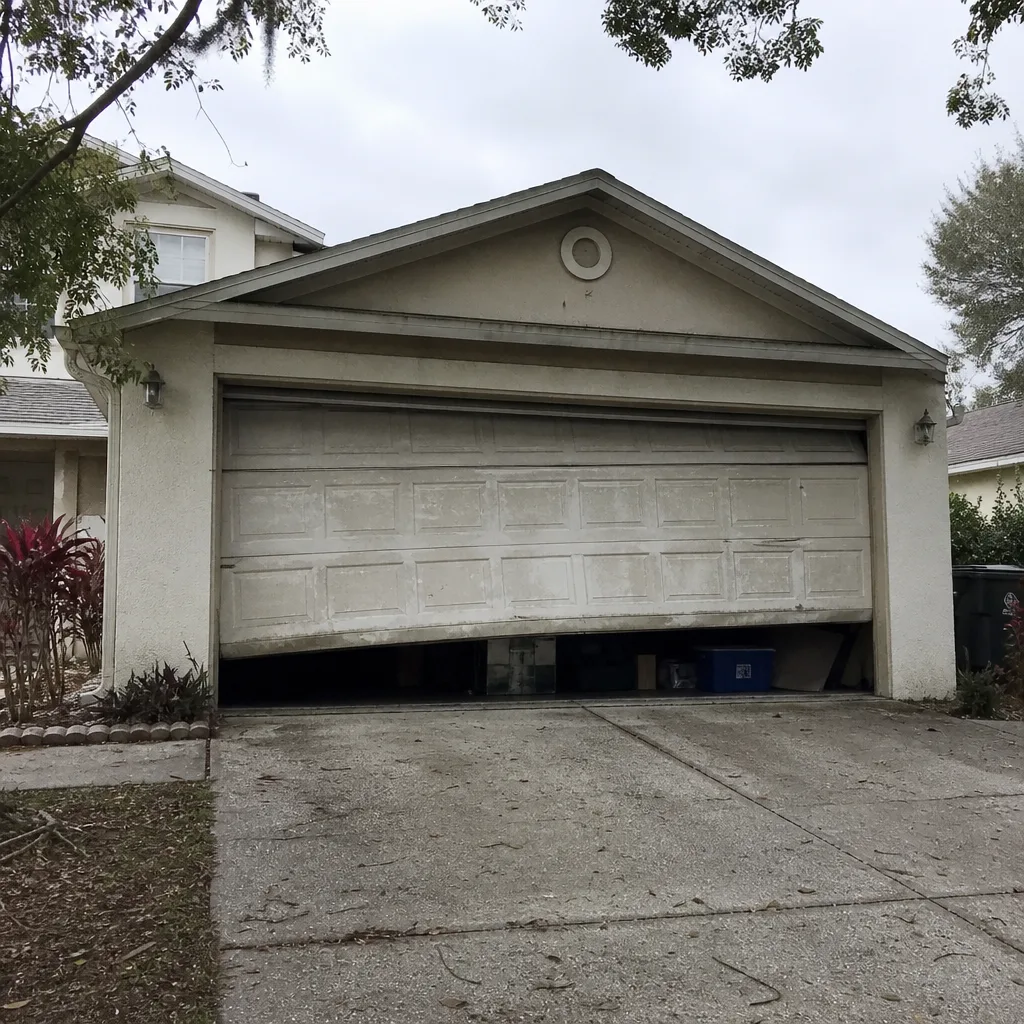
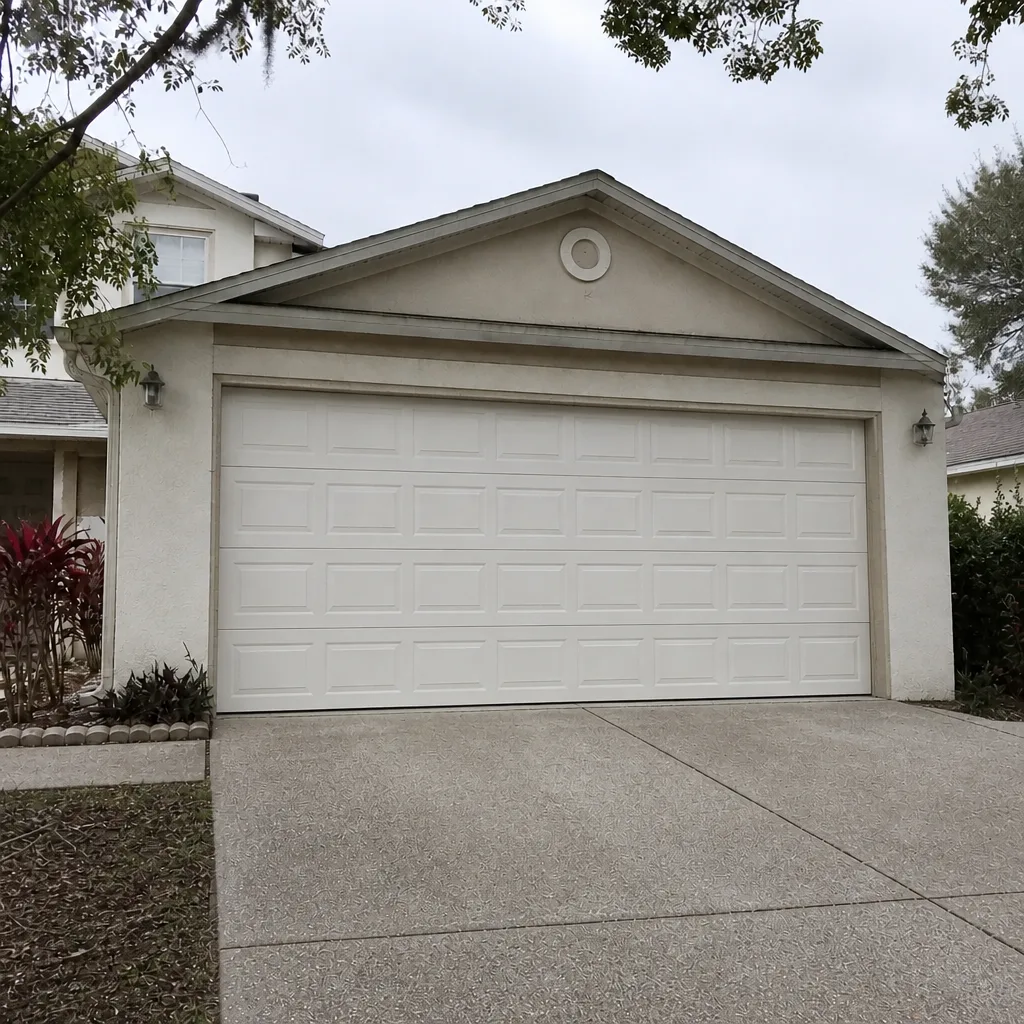
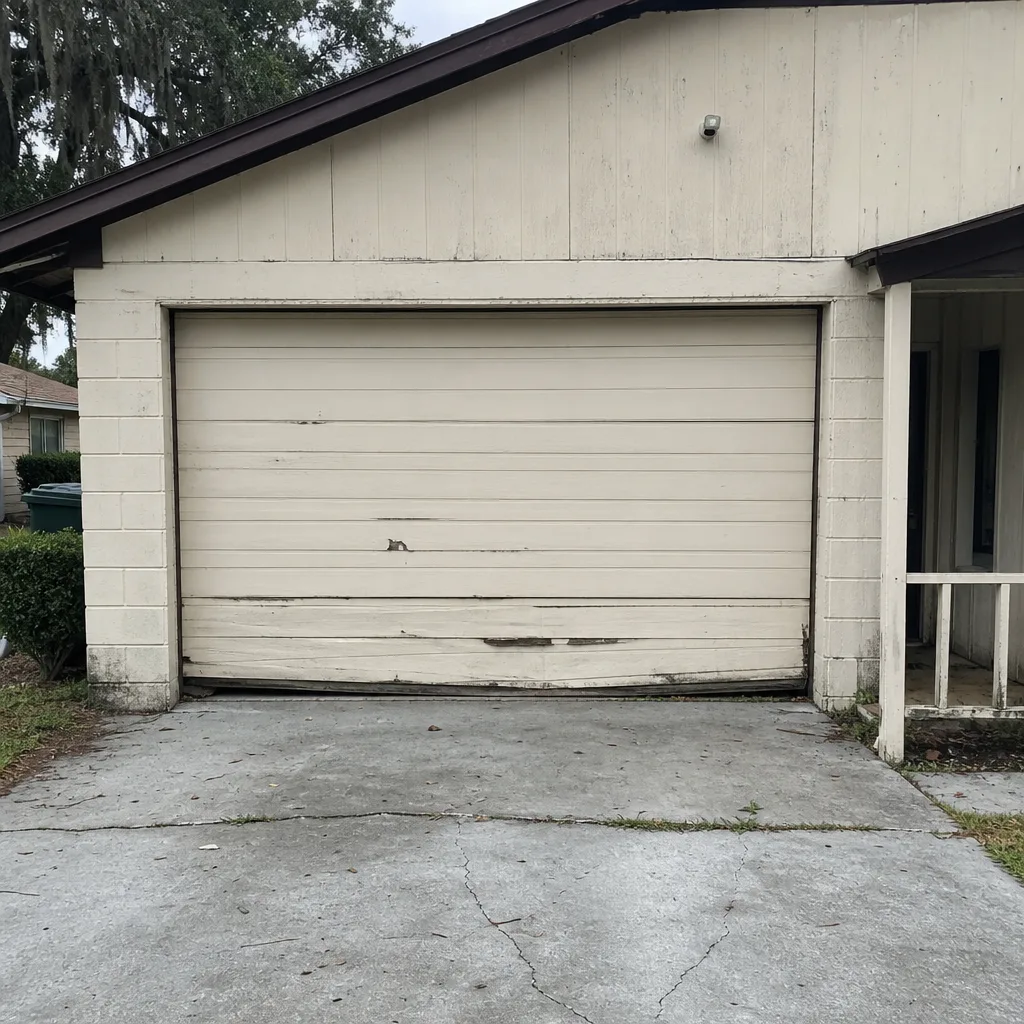
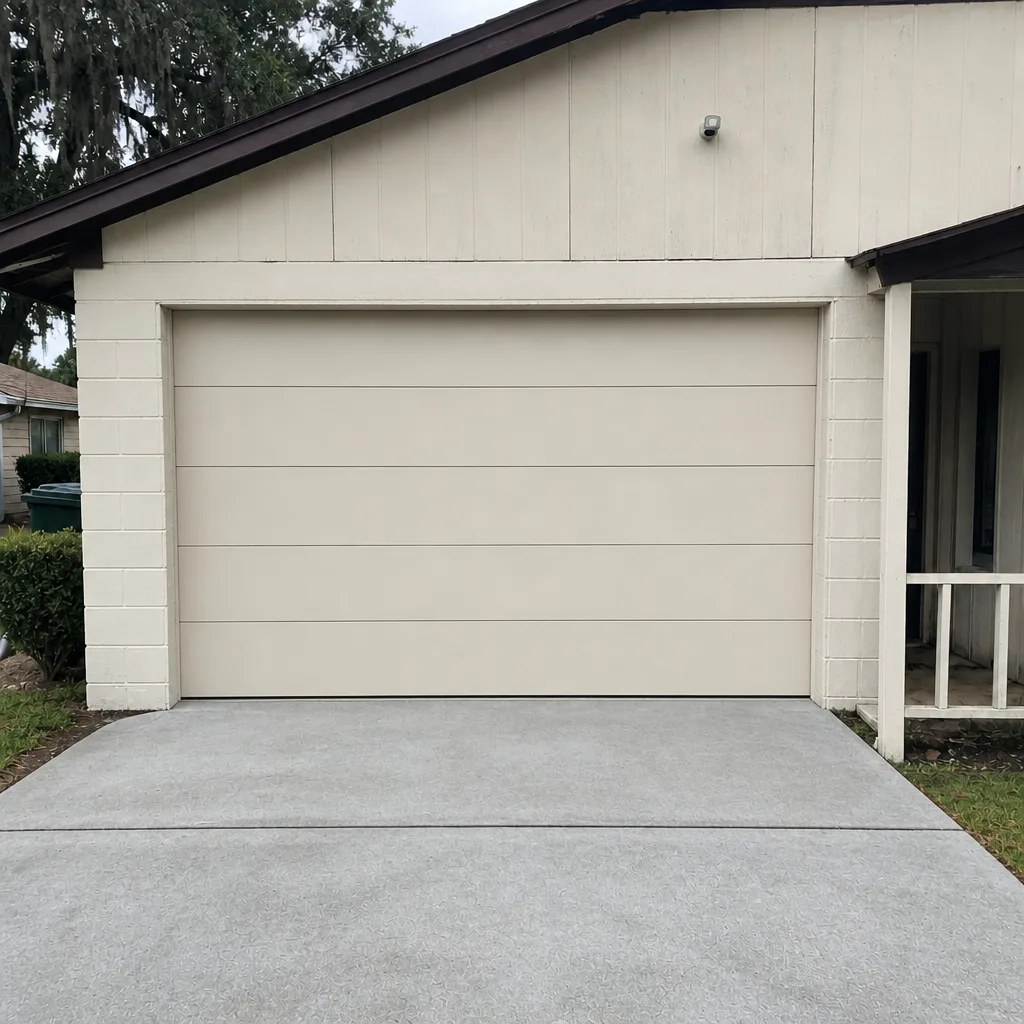
See the difference
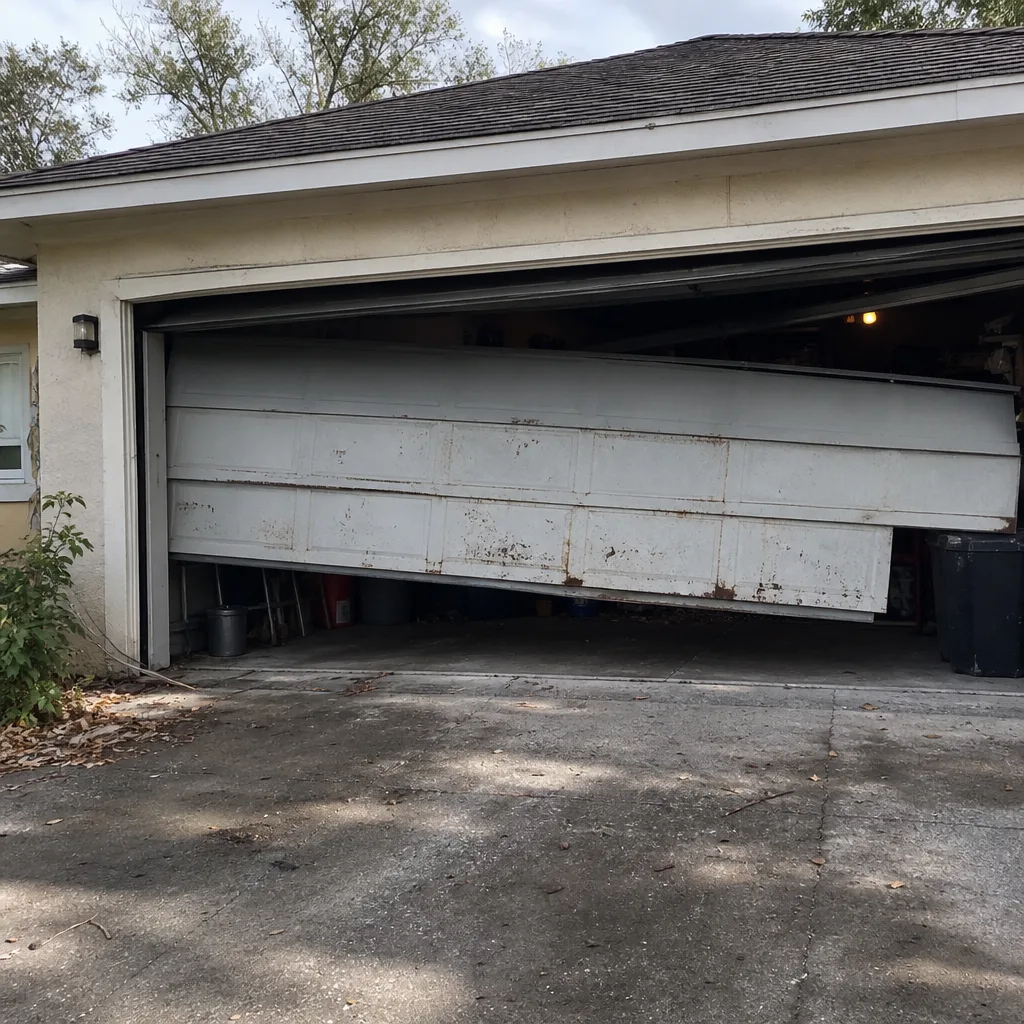 Before
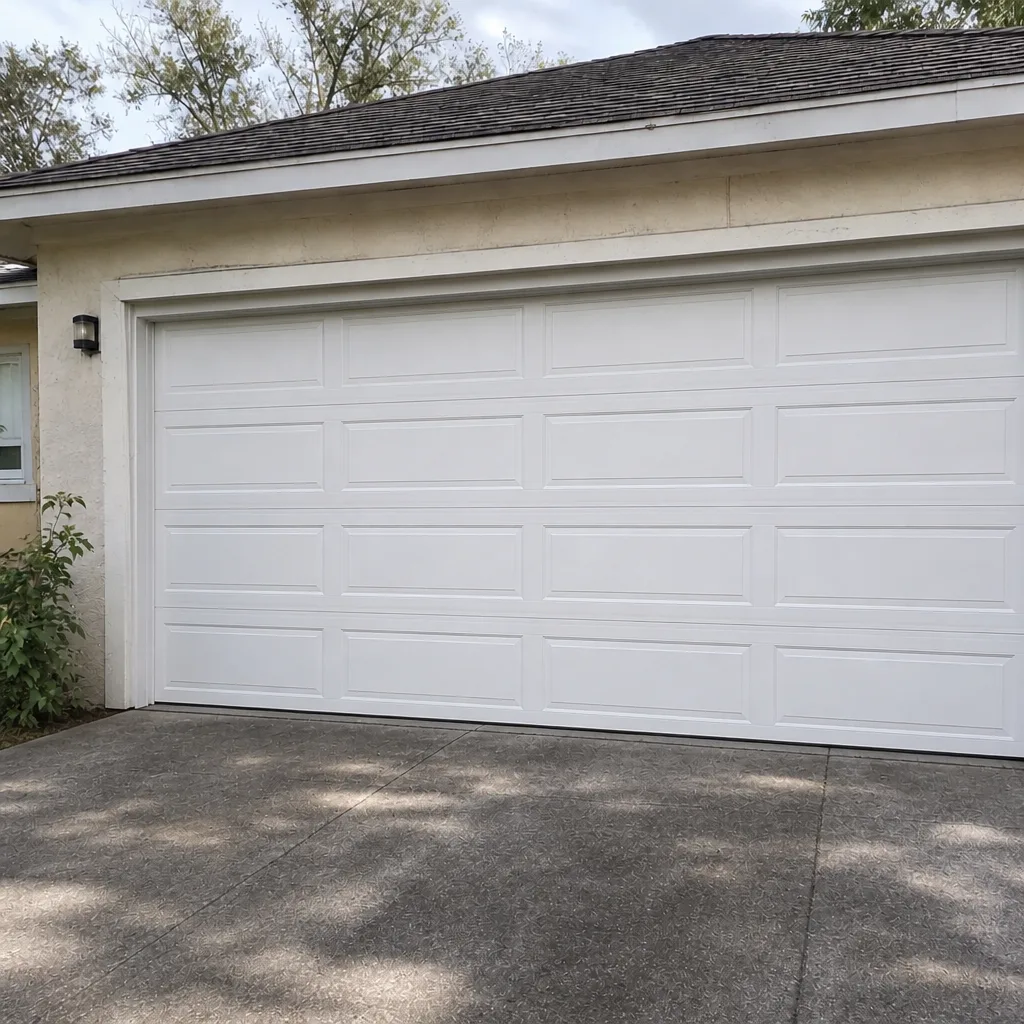 After
 Before
 After
 Before
 After
When to Call a Professional
Some garage door issues are annoying. Others are genuinely dangerous or leave your home open to the street. Call a professional for spring or cable failure (never attempt this yourself), a door that has come off its tracks, an opener that no longer reverses correctly, and any situation where the door won’t close and lock. Also call a pro for a new install or full replacement, even if it looks straightforward: measuring, anchoring, and Florida Product Approval all matter and are easy to get wrong.
Springs are the most common example of a job that looks doable and isn’t safe to attempt. They’re under extreme tension and store enough energy to cause injury. Spring repair is one of the most technically demanding services a garage door company offers, and it’s not a place to save a few dollars. If your opener is failing, garage door opener repair is often simpler than homeowners expect, but diagnosis is faster with the right tools and the right brand training. Sanford Garage Door Repair Co offers free estimates in Sanford – call (855) 658-4309.
Frequently Asked Questions
Yes for jobs that involve structural changes to the garage opening or the home’s framing. Florida requires a DBPR-licensed contractor for that scope, and the license number must be verifiable on the state portal. Repairs to springs, cables, and openers can often be done by a registered specialty contractor, but the license type should still be disclosed clearly and confirmed with your city’s building department for the specific job. Call (855) 658-4309 for a free estimate.
Search the contractor’s license number on the Florida DBPR portal, confirm the license type and active status, check for any complaint history, and make sure the name on the portal matches the name on the written quote. This takes about two minutes and is the single most useful step in the hiring process. Ask the contractor for the license number before you ask for anything else. Call (855) 658-4309 for a free estimate.
A written quote should itemize parts with model numbers, list labor separately, disclose any permit fee, state the warranty terms for both parts and labor, and describe the scope of work in plain language. Compare quotes line by line, not total to total. The written estimate sets the final price in our work, and it should in any contractor’s work. Call (855) 658-4309 for a free estimate.
Yes. Torsion springs are under extreme tension and store enough energy to cause serious injury if handled without proper tools and training. This is not a DIY repair. Spring work is a trained-technician job, and any company that treats it casually is one to avoid. Call (855) 658-4309 for a free estimate.
Look for out-of-state plates or a P.O. box address, cash-only deposits, vague answers about permits, pressure to sign today, and no local address for warranty claims. Legitimate companies measure, quote in writing, and schedule the work. If your door is damaged in a storm, use a company you can find after the storm. Call (855) 658-4309 for a free estimate.
Ask before you book. Contractors who only install one brand are often limited to that brand’s parts and may push replacement over repair. We’re certified to work on eight major brands, including Chamberlain, Genie, Clopay, and Amarr, so we can repair what you already own without steering you toward a replacement. Call (855) 658-4309 for a free estimate.
The Bottom Line
Hiring well in Sanford is mostly about checking three things in the right order: the license type against the scope, the brand coverage against what you already own, and the written quote against a detailed scope. Reviews are a starting point. The DBPR portal, the door’s Florida Product Approval, and a line-item written quote do the actual work. Ask the questions in this guide before you sign. Get the answers in writing. The written estimate sets the final price, and the price you agreed to is the price you should pay. That’s the standard we hold to on every job, from a broken spring to a full new door. Call (855) 658-4309 for a free estimate. We answer 24/7. Fast dispatch from 7am to 7pm, Sunday through Friday, closed Saturday.
Written by the team at Sanford Garage Door Repair Co.